
 USD
 Spain & Europe · EUR
 Mexico · MXN
Mitochondria and ageing: the power stations that decide everything
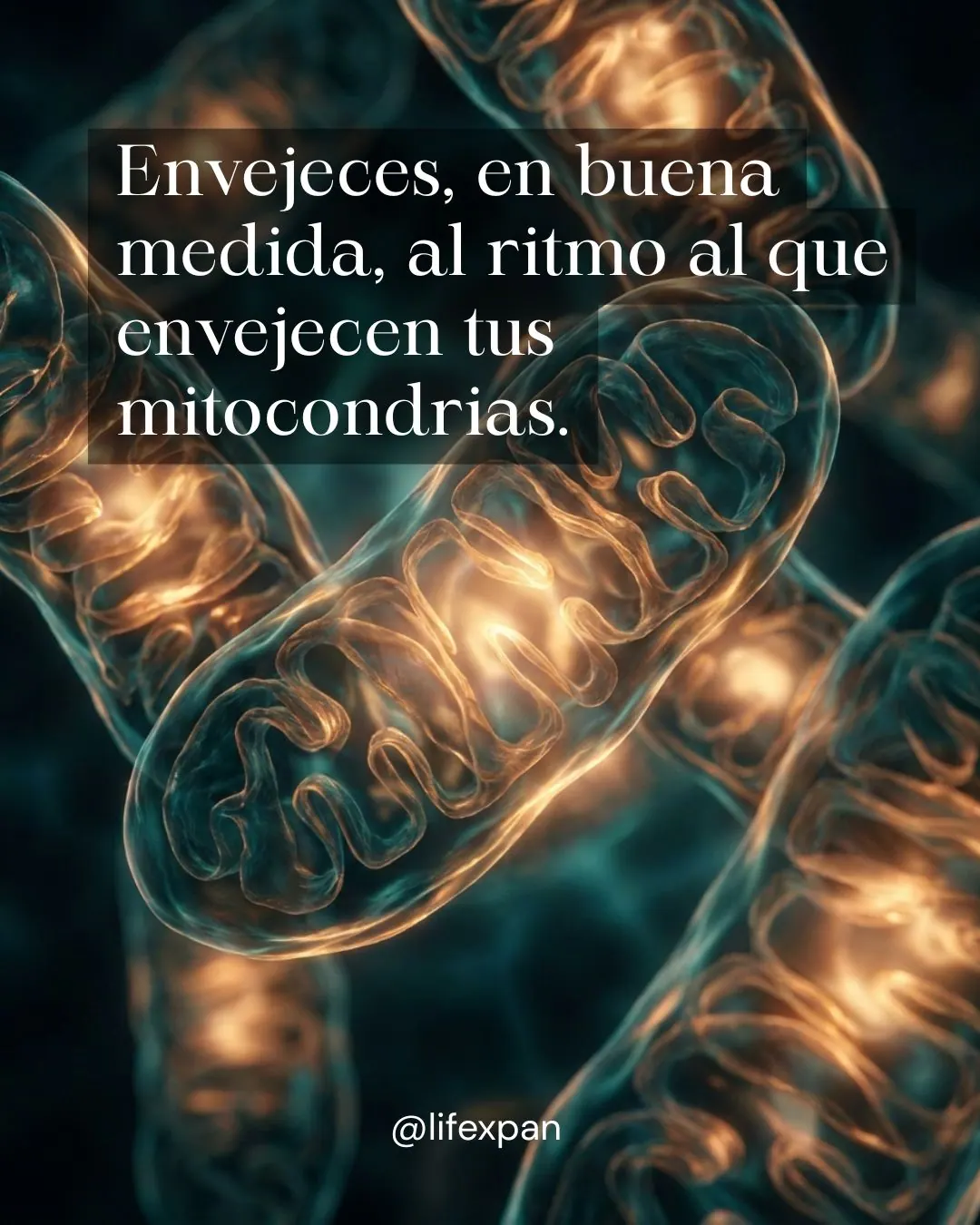
Inside almost every cell in your body there are hundreds, sometimes thousands, of tiny structures working tirelessly. They're called mitochondria, and their job is to convert what you eat and the oxygen you breathe into usable energy. We usually learn at school that they're "the powerhouse of the cell" and that's about as far as it goes. But the science of ageing in recent years has placed these structures at the centre of a powerful idea: you age, to a large extent, at the pace your mitochondria age.
This isn't a metaphor. Mitochondrial dysfunction is now recognised as one of the "hallmarks" of ageing — one of the fundamental processes that explain why the body changes over the years. Understanding how these powerhouses work, why they lose efficiency and what protects them is therefore key to understanding one of the pillars of longevity.
⚡ Longevity Science · 7 min read · Informational content
What your mitochondria actually do
The best-known function of the mitochondrion is to produce ATP, the molecule your body uses as its energy currency. Every movement, every thought, every heartbeat and every cellular repair process is paid for in ATP. And that ATP is manufactured in the mitochondrion, through a process called the electron transport chain.
The tissues that consume the most energy are the ones with the most mitochondria. The heart, for example, is the organ with the highest mitochondrial density in the body — around a third of the volume of each heart cell. The brain and muscles are also major consumers. It's no coincidence that these are precisely the organs that show the effects of time the most.
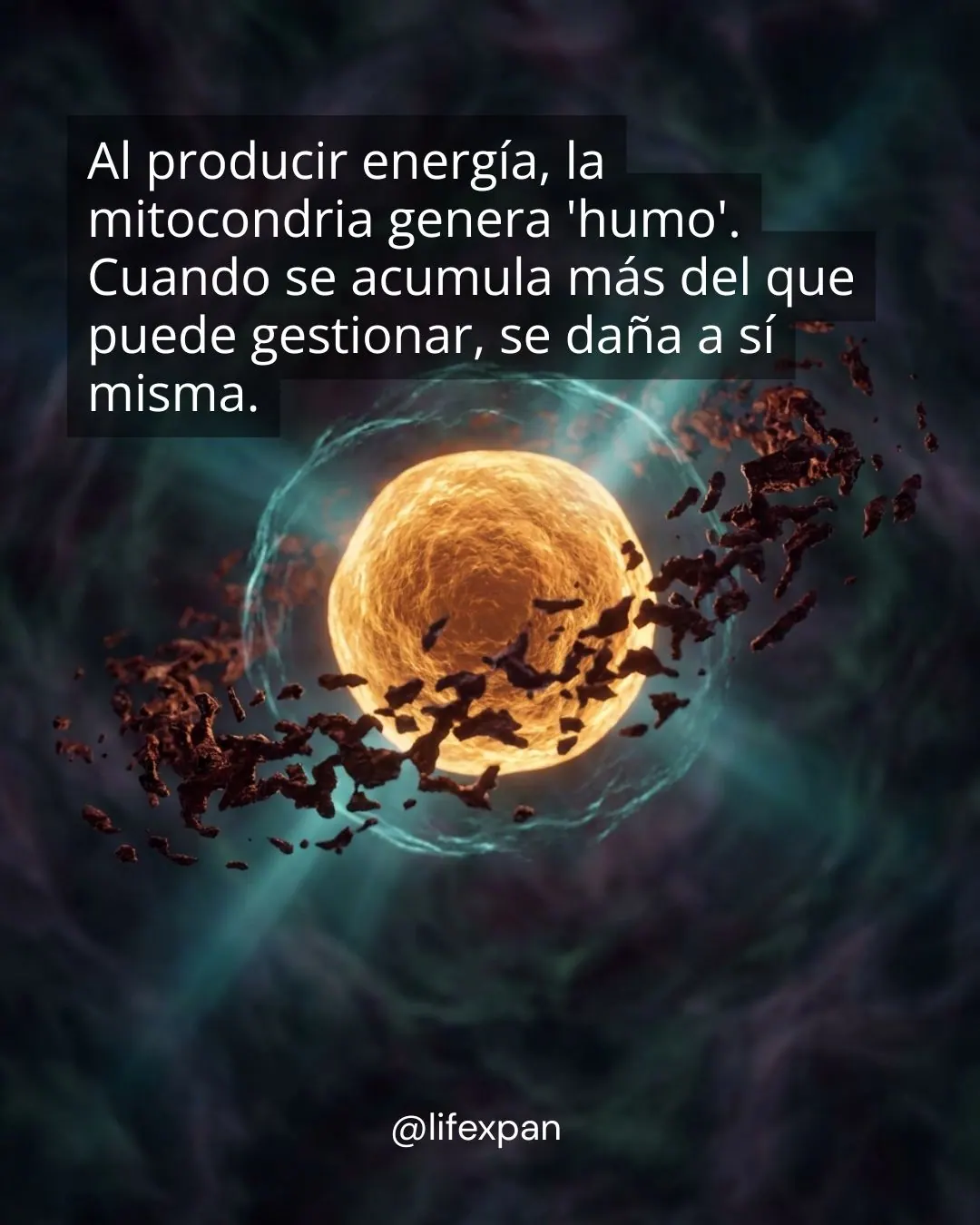
But there's an unavoidable detail in this process: while producing energy, the mitochondrion also generates reactive by-products — the so-called free radicals or reactive oxygen species. In normal amounts, these are manageable and even useful as signals. The problem arises when they build up.
💡 In simple terms
Picture the mitochondrion as an engine that burns fuel to give you energy. Like any engine, besides energy it produces "smoke" — free radicals. A young, well-maintained engine burns cleanly and manages that smoke well. A worn one produces more smoke than it can clear, and that excess ends up damaging the machinery itself.
Why mitochondria lose efficiency with age
Over the years, several things happen in your mitochondria at once, and they all reinforce one another:
They produce less energy. The capacity to generate ATP declines, partly because the machinery loses efficiency and partly because the number of healthy mitochondria falls. The result is that feeling of "the engine running on less power" that many people notice from a certain age onwards.
They generate more free radicals. A less efficient mitochondrion produces more reactive by-products for each unit of energy. And that rise in oxidative stress damages mitochondrial DNA, proteins and membranes — including those of the mitochondrion itself, in a self-reinforcing cycle.
They renew themselves less well. The body has systems to make new mitochondria (biogenesis) and to remove damaged ones (a process called mitophagy). With age, both quality-control systems slow down, so defective mitochondria build up, producing little energy and a lot of damage.
This combination — less energy, more oxidative damage and poorer renewal — is what researchers describe as age-related mitochondrial dysfunction. And it's linked to the wear and tear of the most demanding tissues: the cardiovascular, muscular and neurological systems.
The good news: mitochondria respond
If all this sounds inevitable, here's the encouraging part: mitochondrial health is, to a large extent, modifiable. These are the levers with the strongest evidence behind them.
Exercise, especially endurance and strength training. It's the most powerful stimulus for mitochondrial biogenesis: exercising literally tells your body to make more mitochondria, and more efficient ones. No pill matches this effect.
A diet that doesn't overload the system. Chronic calorie excess and constant glucose spikes increase mitochondrial oxidative stress. A diet rich in polyphenols — vegetables, berries, olive oil — and free from excess ultra-processed foods reduces that burden.
Rest and stress management. Sleep is when much of the cellular repair and cleaning process takes place. Poor rest and chronic stress accelerate mitochondrial damage.
Support from certain nutrients. This is where nutrition comes into the equation — as support for a lifestyle that already takes care of the points above, never as a substitute.
Coenzyme Q10: a key piece within the mitochondria
Of all the nutrients linked to mitochondrial function, there's one that literally lives inside these power stations: coenzyme Q10. It plays two roles that connect directly with everything above.
On one hand, it's an essential part of the electron transport chain — meaning it's directly involved in ATP production. Without enough coenzyme Q10, the mitochondria's energy machinery can't run at full capacity.
On the other, it acts as a fat-soluble antioxidant within the mitochondrial membranes themselves, precisely where oxidative stress is generated. In other words, it helps manage the "smoke" we mentioned, right where it's produced.
The problem is twofold. First, natural coenzyme Q10 production declines with age, alongside mitochondrial decline. Second, conventional coenzyme Q10 is absorbed with great difficulty: it's fat-soluble, requires fat to be absorbed, and much of it is lost during digestion.
🔬 Key fact
The decline in coenzyme Q10 with age occurs precisely in the tissues with the highest energy demands, the very ones that most depend on healthy mitochondria. That's why the goal isn't just to provide more, but to provide it in a form the body can actually absorb.
CavaQ10® + TetraSOD®: designed for the mitochondria
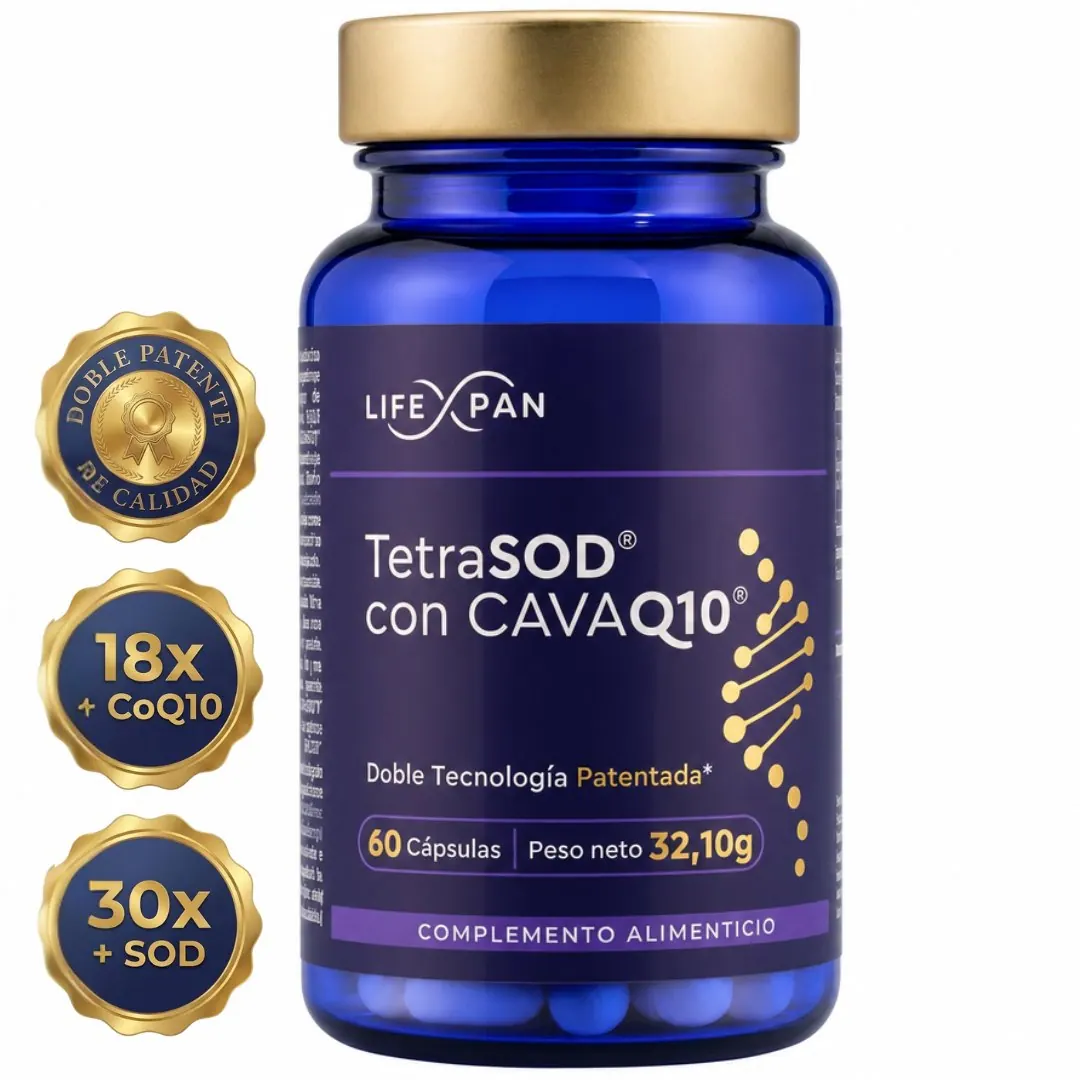
At LifeXpan we've tackled this twofold problem with a formula built around mitochondrial function. CavaQ10® is the first water-soluble coenzyme Q10: thanks to gamma-cyclodextrin technology, it dissolves in water, is absorbed without needing fat, and reaches up to around 18 times the bioavailability of conventional CoQ10. It's taken on an empty stomach, with a glass of water.
Alongside it is TetraSOD®, a marine microalgae extract that provides superoxide dismutase — one of the body's own front-line antioxidant enzymes — which acts at the very first line of defence against free radicals. While coenzyme Q10 sustains energy production and protects the membranes, TetraSOD® helps neutralise part of the oxidative damage that this same process generates, right at its source. Two complementary pieces of the same machinery.
And it fits naturally alongside Pure NR, which helps replenish the NAD⁺ that mitochondria need to function. Three fronts of the same cellular energy chain, designed to be taken together in the morning.
⚠️ An important note
Nutritional support complements, it doesn't replace. The foundation of mitochondrial health is exercise, diet and rest. If you take medication — especially blood thinners — or are pregnant or breastfeeding, consult your healthcare professional before supplementing. Food supplements are not a substitute for a varied and balanced diet.
Conclusion
Mitochondria are far more than the "powerhouse" we were taught about at school. Their condition determines how much vitality you have today and, to a large extent, how you age. Looking after them isn't down to a single action, but to a whole set: moving, eating well, resting and, on top of that foundation, supporting their function.
Because ultimately, looking after your mitochondria means looking after the very machinery behind your energy and your longevity. And that's something that starts long before you notice the engine losing power.
⚡ CavaQ10® + TetraSOD® by LifeXpan®
The first water-soluble coenzyme Q10: up to ~18× more bioavailable and suitable to take on an empty stomach, with TetraSOD® for cellular antioxidant defence. Designed to support mitochondrial function, alongside Pure NR in the morning.
Scientific references
Jia, K. et al. (2025). Mitochondrial Dysfunction in Aging: Future Therapies and Precision Medicine Approaches. MedComm – Future Medicine.
López-Otín, C. et al. (2023). Hallmarks of aging: An expanding universe. Cell, 186(2), 243–278.
Hernández-Camacho, J.D. et al. (2018). Coenzyme Q10 Supplementation in Aging and Disease. Frontiers in Physiology, 9, 44.
Marcheggiani, F. et al. (2019). Modulation of Coenzyme Q10 content and oxidative status in human dermal fibroblasts. Aging, 11(9).
Chistiakov, D.A. et al. (2014). Mitochondrial aging and age-related dysfunction of mitochondria. BioMed Research International, 2014, 238463.
Informational content. This does not constitute an authorised health claim. Food supplements are not a substitute for a varied and balanced diet or a healthy lifestyle.
ATP energy production mitochondrial biogenesis electron transport chain coenzyme Q10 mitochondria how to look after your mitochondria how to improve mitochondrial health mitochondrial dysfunction age reactive oxygen species oxidative stress free radicals mitochondria cellular energy mitochondria and ageing mitofagia PGC-1 alpha why mitochondria work less well with age what damages mitochondria what mitochondria are and what they do the relationship between mitochondria and ageing mitochondrial health mitochondrial health supplements