
 USD
 Spain & Europe · EUR
 Mexico · MXN
Internal clock and energy: why you don't perform the same at all hours

There are hours when everything flows and hours when it feels like you're driving with the handbrake on. We tend to put it down to sleep, coffee or stress. But science has spent years uncovering something deeper: your cells also keep their own clock, and part of the machinery that makes your energy seems to move to its rhythm.
In this article, we look at what's been observed, in which organisms it's been observed, and where the limits of what we can currently claim lie.
⏱️ Longevity & Cellular Energy · 6 min read · Informational content
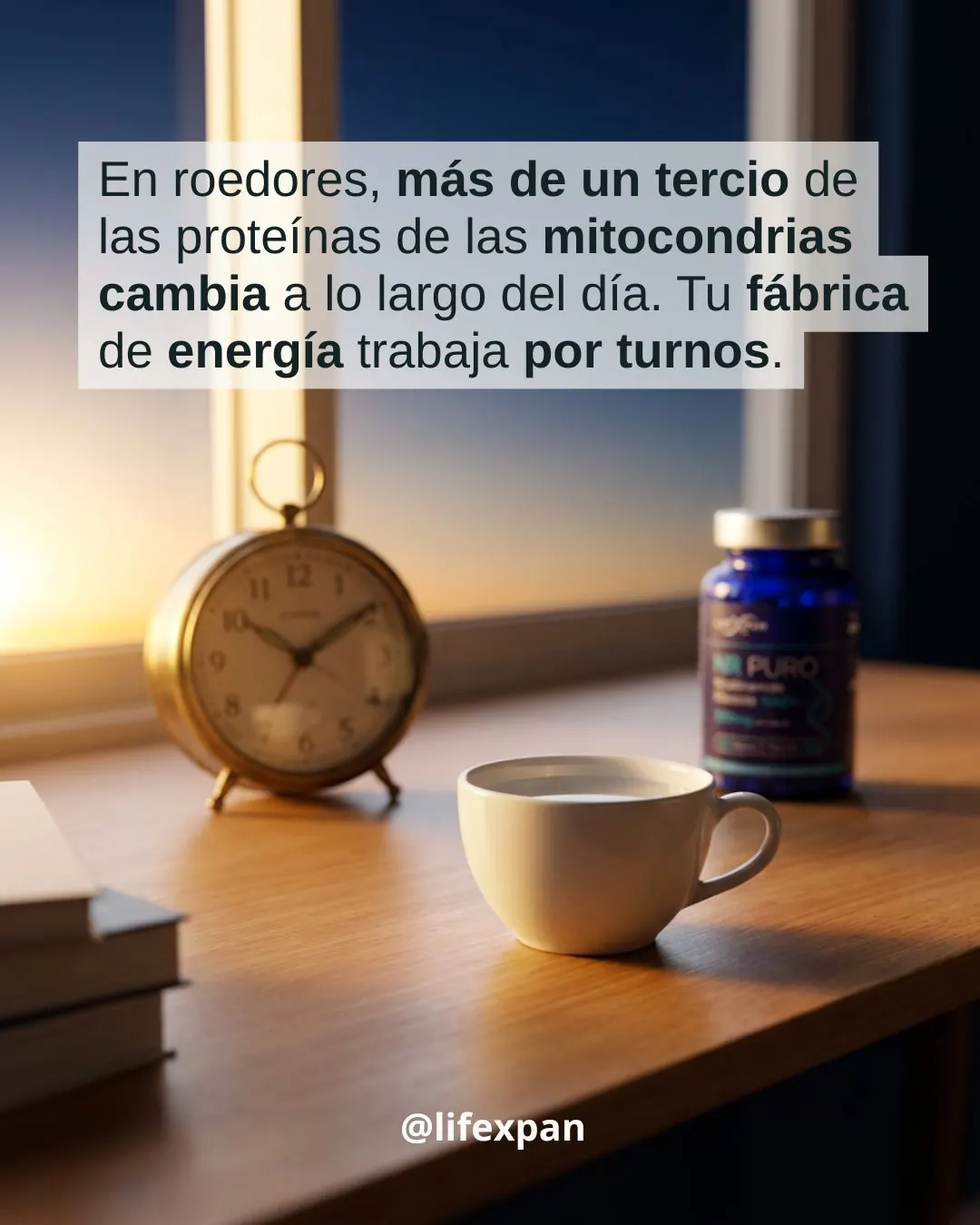
Your body doesn't work the same at 9am as it does at 9pm
The circadian rhythm is the internal clock that organises, in cycles of roughly 24 hours, processes such as sleep, body temperature or metabolism. It doesn't live only in the brain: almost every cell carries its own molecular clock, made up of genes that switch on and off in a rhythmic way.
What's interesting for energy is that this clock doesn't just dictate when you sleep. It also appears to synchronise when and how the mitochondria work, the structures that produce almost all the energy your cells use.
Mitochondria have a schedule too
A review published in Frontiers in Endocrinology (2016) reports that, in studies with rodents and cells, more than a third of mitochondrial proteins accumulate following a daily pattern. It also notes that mitochondrial respiration, the process by which mitochondria produce energy, varies throughout the day and depends on the clock, on nutrients and on meal timing.
In other words: your cells' energy factory doesn't run at a constant pace. It works in shifts.
💡 In simple terms
Picture a factory that doesn't run the same way by day as by night: the teams, the supplies and the intensity all change. Your mitochondria seem to work in much the same way, following the signals of the internal clock.
NAD⁺: the molecule that links the clock with energy
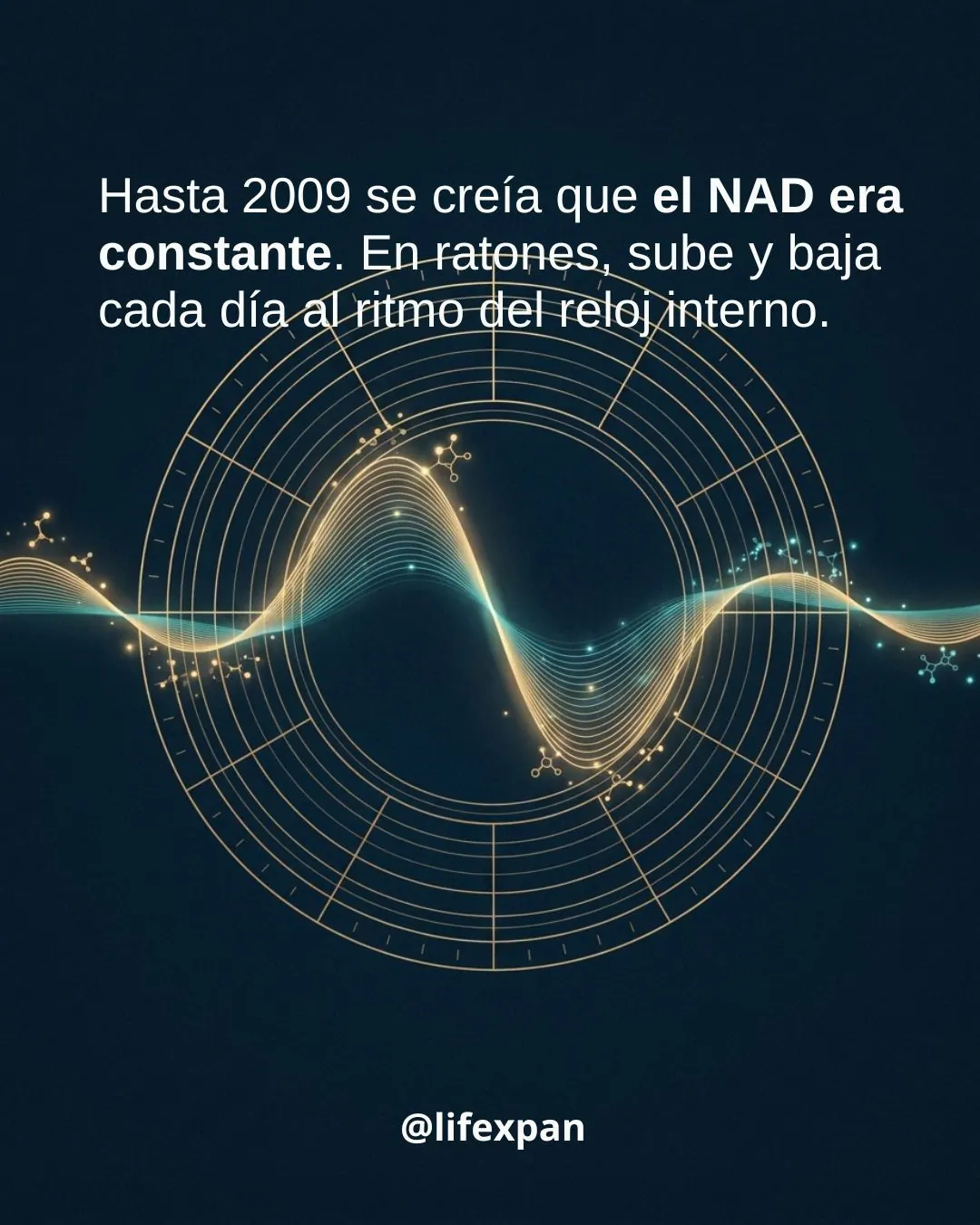
NAD⁺ is a coenzyme involved in cellular energy metabolism. And here we come to one of the most cited findings on the topic: in 2009, a team studied laboratory mice and found that NAD levels fluctuate throughout the day, something previously thought to be fairly constant. This rhythm followed the activity of the clock genes.
The mechanism they proposed is a feedback loop. The clock genes influence NAD production; NAD is needed for SIRT1 to function, a protein that in turn restrains the clock genes. In other words, the clock sets the rhythm of NAD, and NAD in turn influences the clock.
The same 2016 review describes a model in which NAD⁺ acts as a metabolic link between the clock and the mitochondria: in cells lacking a key clock gene (BMAL1), reduced mitochondrial activity could be restored by replenishing NAD⁺ levels. The authors themselves point out that this model is not yet fully established.
🔬 Key fact
All of these findings come from mice, rats and cultured cells. The studies we've cited don't provide data in people, so we can't claim that the same thing happens in the same way in the human body.
And what about age?
Here's another piece of the puzzle. NAD⁺ levels decline with age, and it's also been observed that circadian rhythms weaken in old age. A 2020 study in Molecular Cell explored whether the two are connected in mice.
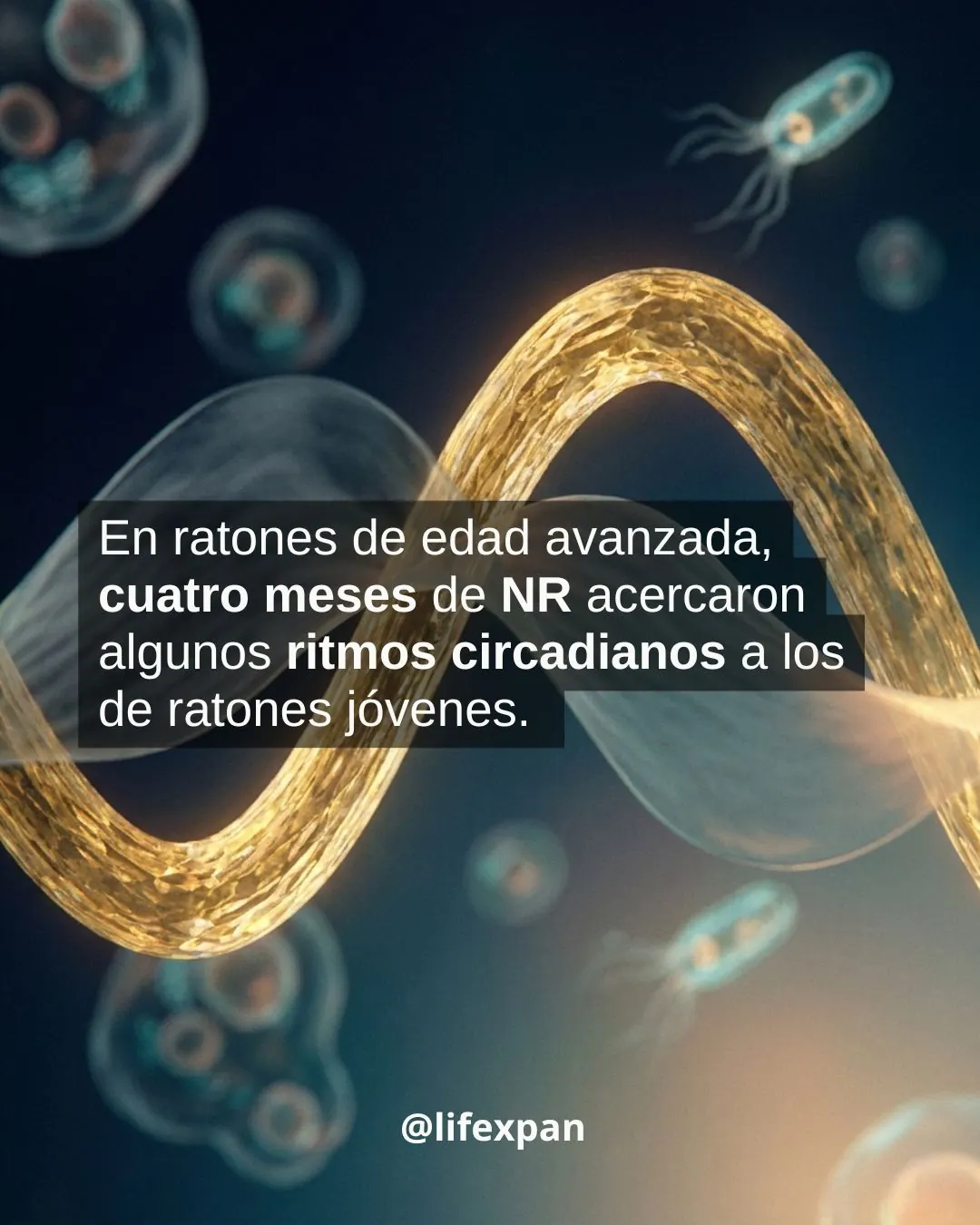
In that study, aged mice received nicotinamide riboside (NR), an NAD⁺ precursor, in their drinking water for four months. According to the study's summary, some circadian traits that had weakened with age were restored towards levels typical of young mice, and around half of the liver genes regulated by the clock shifted in a direction the authors describe as beneficial.
It's a promising result, but it should be read with caution: these are mice, with controlled exposure over several months. It's not proof that the same thing happens in people, and human research into this specific link remains an open question.
What we can take from all this
Without making any promises, three ideas hold up based on what we've seen:
1. Energy has a rhythm. It's not unusual that you don't perform the same way at every hour: cell biology follows cycles.
2. Pattern matters. In animals, mitochondrial respiration depends on the clock as well as on meal timing. Keeping your routines regular is consistent with what this research suggests.
3. NAD⁺ is a central piece, and it declines with age. That's why its precursors, such as NR, are being studied as part of a broader approach to caring for cellular energy, one whose main pillars remain sleep, diet and exercise.
If you'd like to understand what NR is and how the body uses it, we explain it step by step in our guide from scratch.
⚠️ An important note
If you take regular medication, are pregnant or breastfeeding, consult your healthcare professional before taking any supplement. Food supplements are not a substitute for a varied, balanced diet and a healthy lifestyle.
Conclusion
Your energy isn't a straight line: it's a wave. And behind that wave is a clock in every cell, mitochondria that change shifts, and a molecule, NAD⁺, that seems to sit at the centre of it all. Science is still working out how much of this applies to people, but understanding the rhythm is the first step towards looking after it.
Scientific references
Manella, G. and Asher, G. (2016). The Circadian Nature of Mitochondrial Biology. Frontiers in Endocrinology, 7, 162.
Ramsey, K. M. et al. (2009). Circadian clock feedback cycle through NAMPT-mediated NAD+ biosynthesis. Science.
Levine, D. C. et al. (2020). NAD+ Controls Circadian Reprogramming through PER2 Nuclear Translocation to Counter Aging. Molecular Cell.
Informational content. This does not constitute an authorised health claim.
mitocondrias mitochondria cellular energy NAD+ NAD+ and biological clock why I have more energy at certain times of day what circadian rhythm is and how it affects energy biological clock and energy circadian rhythm