
 USD
 Spain & Europe · EUR
 Mexico · MXN
NR vs NMN Part II-III: the transformation of mitochondrial health | Research article
This article is the continuation of NR vs NMN Part I-III: The silent duel in anti-ageing | (lifexpan.eu)
Introduction
The search for interventions to slow down ageing has intensified in recent years. One of the most studied pathways involves nicotinamide adenine dinucleotide (NAD⁺), an essential coenzyme in cellular metabolism. NAD⁺ levels naturally decline with age, and this decline has been linked to metabolic dysfunction, chronic inflammation and other hallmarks of ageing. Restoring NAD⁺ levels in aged organisms can improve health and even extend longevity in animal models. NAD⁺ plays dual roles: it takes part in redox reactions for energy production and acts as a substrate for key enzymes related to ageing, such as sirtuins and PARPs (poly-ADP ribose polymerases). Sirtuins, for example, require NAD⁺ to promote DNA repair and the expression of genes associated with greater cellular health, and their activation has been linked to increased lifespan in model organisms.
In this context, nicotinamide riboside (NR), a derivative of vitamin B3 that acts as a precursor of NAD⁺, has attracted particular interest. NR can be efficiently converted into NAD⁺ via the NAD salvage pathway within cells. Unlike other precursors such as nicotinic acid (niacin) or nicotinamide mononucleotide (NMN), NR has shown good oral bioavailability and the ability to raise NAD⁺ levels in peripheral tissues in humans. These properties have led NR to be available as a dietary supplement (e.g., the nicotinamide riboside chloride form marketed as Niagen®) and to numerous studies into its potential benefits for health and longevity.
However, critical questions remain: can NR supplementation genuinely improve the health of older people, or even extend their life? What are the molecular mechanisms involved, and what results have been confirmed in preclinical and clinical studies? Are there risks or adverse effects from artificially increasing NAD⁺? This article examines the 10 most recent reports or studies (from the last ~2–3 years) on longevity and its link with NAD⁺/NR, covering both academic publications (peer-reviewed journals such as Nature, Science, Cell Metabolism, Aging Cell, etc.) and reports from specialist science and health media, in both English and Spanish. Below are the main findings of these studies, highlighting advances, key findings, controversies and potential clinical applications related to the use of NR to boost NAD⁺ in support of longevity.
Review methodology
To compile this review, an exhaustive search of recent literature (2022–2025) related to NAD⁺, nicotinamide riboside and longevity was carried out. Scientific databases (PubMed, Scopus) were consulted to identify original articles on animal models and clinical trials in humans, as well as relevant reviews. In addition, reports from specialist media (medical news sites, university press releases, accredited science blogs) summarising recent studies on NR and ageing were gathered, including sources in Spanish. Ten key publications were selected: primarily pioneering experimental or clinical studies, complemented by influential reviews or critical analyses of the current state of the evidence.
Each source selected contributes a piece to the overall picture: from clinical trials assessing whether NR improves health markers in ageing populations, to preclinical studies exploring the benefits and possible risks of raising NAD⁺, to reviews that synthesise the accumulated findings. The following section (“Key findings”) summarises the information from these ten studies, together with their corresponding references. For added clarity, a comparative table is included, summarising the main characteristics of each study (study type, subjects or model, intervention and key results). This mixed methodology ensures a balanced perspective – integrating laboratory data, early clinical evidence and expert opinion – on the role of NR/NAD⁺ in longevity.
Key findings
Recent studies on NAD⁺ and longevity involving nicotinamide riboside show varied results. Taken together, they confirm that NR effectively raises NAD⁺ levels in cells and tissues, and suggest benefits in certain aspects of healthy ageing (for example, reduced inflammation, improved metabolic function and cellular resilience). However, they also reveal limitations and controversies: some human trials have not observed strong clinical improvements, and animal-model evidence warns that it is not a universal “panacea” for extending lifespan, and could even have counterproductive effects in specific contexts (such as cancer). Below is a summary of ten representative recent studies or reports:
• NR supplementation in older adults (Martens et al., 2023):
A randomised clinical trial (Aging Cell, 2023) explored the effects of NR on the brain. 22 healthy older adults received oral NR (500 mg twice daily) or a placebo for 6 weeks. NR approximately doubled NAD⁺ levels measured in neuronally derived extracellular vesicles (an indirect marker of brain NAD⁺) and reduced biomarkers associated with neurodegeneration: for example, β-amyloid 42 peptides decreased significantly, as did JNK and ERK kinase activation in these vesicles. In addition, changes in NAD⁺ correlated with favourable changes in insulin signalling pathways (Akt) and inflammatory markers in plasma. Although no significant differences were observed in total blood concentrations of beta-amyloid or tau protein across the whole group, these results provide evidence that orally administered NR can indirectly cross the blood-brain barrier (via vesicles) and modulate brain processes related to Alzheimer's disease. This is a promising finding in terms of improving brain health during ageing, although it does not yet prove clinical cognitive benefits. The authors emphasised the need for longer studies to determine whether these biochemical changes translate into improved cognitive function.
• NR and reduced lung inflammation in older adults with COPD (Scheibye-Knudsen et al., 2024):
A study published in Nature Aging (2024) examined NR's ability to improve lung health in patients with chronic obstructive pulmonary disease (COPD), a condition linked to ageing. A double-blind clinical trial was conducted with 40 older patients with stable COPD (and 20 healthy controls), who received 2 g of NR daily or a placebo for 6 weeks. NR treatment more than doubled blood NAD⁺ levels in patients (confirming absorption) and markedly reduced airway inflammation: specifically, sputum levels of the pro-inflammatory cytokine interleukin-8 (IL-8) dropped by ~50% in the NR group compared with placebo after 6 weeks. Remarkably, this anti-inflammatory effect persisted for at least a further 12 weeks after stopping the supplement, with an IL-8 reduction of up to 63% from baseline. It was also observed that COPD patients had lower baseline blood NAD⁺ levels than healthy subjects, which was associated with signs of accelerated biological ageing as measured by DNA methylation. The rise in NAD⁺ with NR coincided with a slowing of cellular ageing markers in these patients. Although studies in older populations and over longer periods are needed, this trial suggests that NR may mitigate age-related inflammatory processes, potentially improving lung function and quality of life in older adults with chronic conditions.
• NR improves walking endurance in peripheral artery disease (Leeuwenburgh & McDermott et al., 2024):
Researchers from the University of Florida and Northwestern University carried out a phase II trial in 90 older adults (~71 years old) with peripheral artery disease (PAD) – a condition that restricts blood flow to the legs and reduces walking ability. Participants were assigned to receive over 6 months: (a) oral NR 1,000 mg/day, (b) NR 1,000 mg + resveratrol (a polyphenol), or (c) placebo. According to the report published in Nature Communications (June 2024), the NR group showed a significant functional improvement: the distance covered in the 6-minute walk test increased by +23 feet (~7 metres), in contrast to the placebo group, which reduced its distance by –34 feet. On average, walking endurance improved by more than +57 feet (~17 m) in those treated with NR compared with placebo. Furthermore, patients with high treatment adherence (≥75% of doses taken) improved even more, adding >100 feet (~30 m) to the distance walked in 6 minutes versus placebo. These results suggest that NR supplementation (with or without resveratrol) improves physical capacity in an older adult population with PAD, possibly through better muscular energy supply or endothelial function. It is worth noting that there are currently few effective treatments for intermittent claudication caused by PAD, so this supplement could become a complementary therapeutic tool to maintain mobility and independence in old age. The researchers plan larger-scale trials to confirm these benefits and better understand the mechanisms involved (for example, whether NR improves muscle mitochondrial function or peripheral blood perfusion).
• Preclinical evidence: NR and cancer risk (Goun et al., 2022):
An international study led by the University of Missouri (published in 2022) introduced some controversy by suggesting that excessively high levels of NAD⁺ could be harmful in oncological contexts. Using a novel bioluminescent biosensor to track NR uptake in live animals, the researchers observed that supplementing mice bearing triple-negative breast cancer with high doses of NR accelerated tumour progression and increased the likelihood of metastasis to the brain. In mouse models of this aggressive cancer, tumour cells showed elevated uptake of NR, using the extra NAD⁺ to fuel their accelerated metabolism. As a result, the supplemented animals developed more brain metastases than those not supplemented. Given that brain metastases are often fatal and no effective treatments exist, this finding raises concern.
The lead author, Dr Elena Goun, noted that while many people take vitamins assuming only benefits, "little is known about how they really work" in certain contexts. This study does not suggest that NR causes cancer from scratch, but rather that in the presence of an aggressive tumour it could favour its growth/spread by providing extra energy to malignant cells. The implication is that NAD⁺ supplements, despite their potential benefits, are not without risks and should be used with caution, especially in individuals with a history of cancer. In fact, alongside interest in NAD⁺ for ageing, there are trials in which NR is given to cancer patients to mitigate the side effects of chemotherapy; the authors advise that these cases be carefully monitored. This report highlights the need for balance: stimulating cellular metabolism through NAD⁺ can be a double-edged sword, beneficial for healthy cells but potentially also for tumours.
• Safety and new routes of administration for NR (Dunne et al., 2024):
A large part of the accumulated research confirms that NR is well tolerated and safe in humans at the doses tested. Initial studies showed that single oral doses of up to 1,000–2,000 mg raise NAD⁺ without serious adverse effects , and longer trials (8–12 weeks) with 1,000 mg daily reported no major adverse events in middle-aged or obese adults . A very recent pilot study explored the intravenous administration of NR, opening the door to clinical uses in acute settings. In this randomised trial (medRxiv preprint, 2024), 37 adults received a single infusion of intravenous NR (500 mg), compared against a direct NAD⁺ infusion (500 mg) or placebo . The aim was to assess safety and the rise in blood NAD⁺. The results showed that IV NR was well tolerated, with no attributable adverse events during 14 days of follow-up, and in fact caused fewer mild side effects during the infusion than administering NAD⁺ intravenously directly . IV NR also managed to raise systemic NAD⁺ levels rapidly. This suggests that parenteral use of NR could be viable in clinical settings (for example, for patients unable to take it orally or who need more immediate increases in NAD⁺). Overall, multiple safety studies – including a 2019 trial with 120 older adults taking NR + pterostilbene for 2 months – have found no significant issues, even at doses of up to 2,000 mg/day . Recently, a dose-escalation study reported that even 3,000 mg daily of NR is tolerable under close monitoring, widening the range considered safe . These data provide reassurance that the toxicity of NR is low, although more long-term studies are always needed to rule out subtle effects.
• Critical review of the state of the evidence (Damgaard & Treebak, 2023):
Researchers from the University of Copenhagen published in 2023 a comprehensive analysis of all the clinical research on NR to date (25 human studies) . Their review, titled “What is actually known about the effects of nicotinamide riboside supplementation in humans”, offers a sober perspective. They conclude that, although NR consistently raises NAD⁺ levels, it has shown “few clinically relevant effects” in humans so far . They note that several publications tend to overstate the importance or robustness of the reported effects . For example, many trials had small sample sizes, short durations or safety rather than efficacy endpoints. Nonetheless, the authors acknowledge some promising findings: the reduction of inflammatory markers (such as cytokines) appears repeatedly in subjects taking NR , which fits with the idea that high NAD⁺ promotes a more anti-inflammatory metabolic state. There are also signs of possible benefits in specific severe conditions (metabolic, neurodegenerative diseases), but these results are preliminary . In short, this review underlines that NR is not yet a proven “fountain of youth”, although it could play a supporting role in improving health in old age by modulating processes such as inflammation and energy metabolism. They recommend carrying out larger and more rigorous clinical trials in ageing populations, with hard clinical outcomes (physical function, cognition, disease incidence) to truly determine the potential of NR in longevity medicine.
• Absence of lifespan extension in animal longevity studies:
Despite the positive effects on metabolic health and ageing markers, it has not so far been shown that NR extends maximum lifespan in higher organisms. The Interventions Testing Program (ITP) of the US National Institute on Ageing – a consortium that evaluates compounds in long-lived mice using standardised methods – reported that chronic NR supplementation did not increase longevity in genetically heterogeneous mice (UM-HET3) . In that 2021 study, only 17-α-estradiol managed to extend median lifespan in males, while NR (and 3 other compounds tested) had no significant effect in either sex . It is worth mentioning that an earlier 2016 study had found a slight increase in median lifespan in mice given NR, but the ITP's more recent consensus is negative. In other words, raising NAD⁺ in normal mice did not make them live longer. This suggests that, while NR improves metabolic health (healthspan) or delays in certain pathologies, on its own it may not be enough to extend maximum lifespan in healthy individuals. Of course, longevity is a complex outcome influenced by many factors, and it is possible that combinations of therapies (NR + other interventions) or its use in the presence of disease could show survival impacts that NR alone does not achieve. Nonetheless, this finding invites us to moderate expectations: NR has not proven to be an elixir for living beyond the natural course, at least in well-controlled laboratory models .
If you're looking for pure NR...
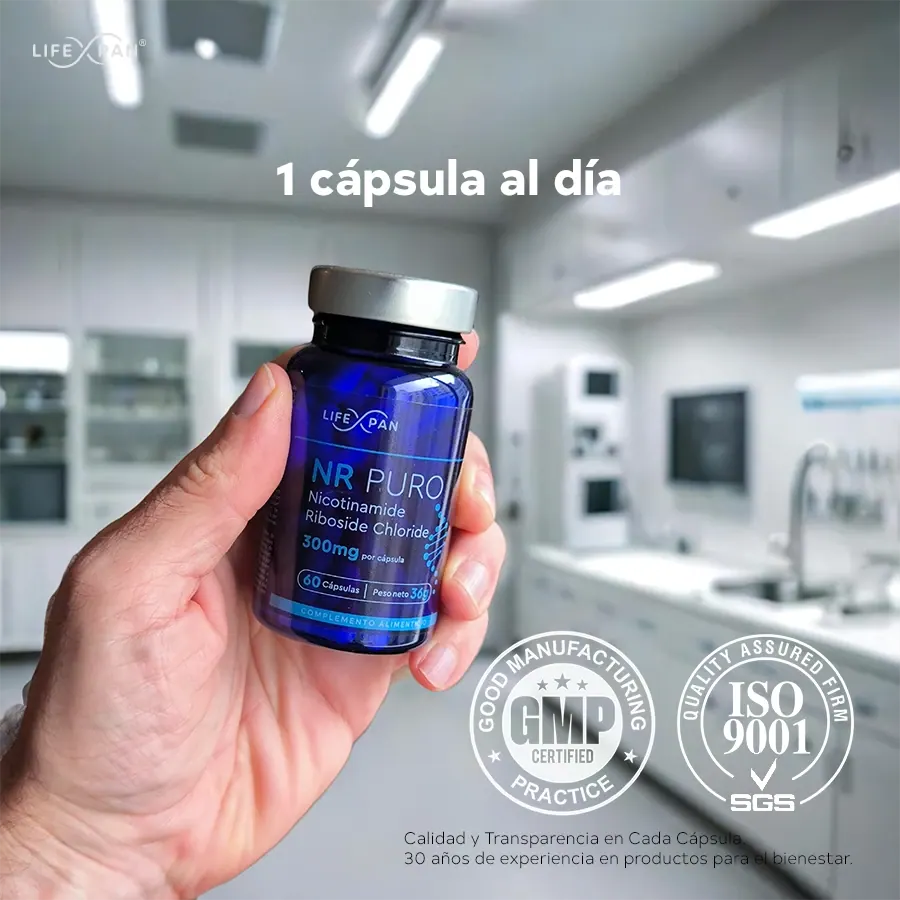
The purest on the market LifeXpan® NR PURO 60
Below, in Table 1, these recent studies and reports on NAD⁺/NR and longevity are summarised, including their design and main findings:
|
Study (year) |
Design / Participants |
Key findings |
Reference |
|---|---|---|---|
|
Martens et al. (2023, Aging Cell) – NR and brain function in older adults. |
Crossover clinical trial in 22 healthy older adults (NR 1 g/day vs placebo, 6 weeks). |
↑NAD⁺ in neuronal vesicles; ↓ Alzheimer's biomarkers (Aβ_42, pJNK, pERK) in plasma; suggests a beneficial neuronal impact . |
|
|
Scheibye-Knudsen et al. (2024, Nature Aging) – NR in COPD. |
Clinical trial in 40 elderly patients with COPD (NR 2 g/day vs placebo, 6 weeks) + 20 healthy controls. |
↑Blood NAD⁺; ↓IL-8 in the airways (~50% at 6 weeks) persists after discontinuation; indications of reduced cellular ageing in the NR group . |
|
|
Leeuwenburgh/McDermott (2024, Nat Commun) – NR in peripheral arterial disease. |
Phase II clinical trial in 90 adults ≥70 years with PAD (NR 1 g/day ± resveratrol vs placebo, 6 months). |
↑Walking endurance: +23 feet in the 6-min walk test (versus –34 feet with placebo); adherent participants improve >+100 feet vs placebo . Possible improvement in muscular energetics, to be confirmed in larger studies. |
|
|
Goun et al. (2022, Univ. of Missouri) – NR and cancer (preclinical). |
Study in murine models of triple-negative breast cancer; in vivo NAD⁺ sensor. |
High doses of NR → ↑tumoural NAD⁺; ↑brain metastasis in mice with aggressive cancer . Suggests caution: extra NAD⁺ may fuel tumours in certain contexts. |
|
|
Dunne et al. (2024, medRxiv) – Intravenous NR infusion. |
Randomised pilot trial in 37 adults (single infusion of NR 500 mg IV vs NAD⁺ IV vs placebo). |
IV NR safe and well tolerated (fewer adverse effects than IV NAD⁺); ↑rapid rise in blood NAD⁺ . Supports the feasibility of IV administration in clinical settings (e.g. acute cases). |
|
|
Damgaard & Treebak (2023, Critical Review) – Effects of NR in humans. |
Review of 25 clinical studies on NR (2016–2023). |
NR consistently raises NAD⁺; few robust clinical effects detected . Most reproducible effect: ↓systemic inflammation . Recommends more long-term trials. |
|
|
ITP, NIA (2021, Aging Cell) – NR and longevity in mice. |
Chronic intervention with NR in genetically heterogeneous mice (UM-HET3), both sexes. |
Did not extend maximum or median lifespan in either sex . (Contrast: 17-α-oestradiol did prolong lifespan in males). Suggests that raising NAD⁺ alone does not extend maximum longevity. |
|
|
Other clinical trials (2018–2022) – Metabolic and cardiac NR. |
E.g. Remie et al. 2020 (6 weeks NR in obese men); Dollerup et al. 2018 (12 weeks NR in insulin resistance); Simic et al. 2022 (NR+PT in heart failure). |
No significant changes in insulin sensitivity, mitochondrial function or cardiometabolic parameters in the general population . Some minor improvements (e.g. body composition), but modest clinical effect. Confirms a favourable safety profile. |
|
|
New formulations (Bita et al. 2023, Molecules) – NR stability. |
Chemical perspective article on NR. |
Pure NR is unstable (degrades during storage); development of NR borate as a stabilised form. NR-borate dissociates after ingestion and releases active NR . Improves the viability of high-quality supplements, ensuring effective NAD⁺ doses. |
|
|
Specialist media (2023–2024) – Scientific press coverage. |
(Multiple news items in MedicalNewsToday, ScienceDaily, News-Medical, etc., incl. Spanish-language sources: Medi.travel, TheFoodTech). |
Highlighting findings such as: vitamin B3/NR may slow neuronal ageing (study in Aging Cell on Alzheimer's) ; NR reduces lung inflammation in COPD ; NAD⁺ supplement improves walking in older adults . They also report warnings about the oncological risks of NR . They help make these scientific advances accessible to the wider public. |
Table 1: Recent studies and reports (2021–2024) on nicotinamide riboside (NR), NAD⁺ levels and longevity, with their main characteristics and results. NR = nicotinamide riboside; NAD⁺ = oxidised nicotinamide adenine dinucleotide; IL-8 = interleukin 8; COPD = chronic obstructive pulmonary disease; PAD = peripheral arterial disease; IV = intravenous; PT = pterostilbene. The references correspond to the sources cited in the text reporting each finding.
anti-envejecimiento research nmn nr