
 USD
 Spain & Europe · EUR
 Mexico · MXN
Spring detox: how to support your cellular regeneration as the season changes

Every year, when spring arrives, something shifts within our bodies. It's not just poetry: biology has a lot to say about why this season is, even at a cellular level, a time of renewal.
The light increases, temperatures rise, and our circadian rhythm adjusts. With these changes, our organism naturally activates certain cleansing and regeneration mechanisms that had been running more slowly during the cold months. The trouble is that in the modern world — with chronic stress, ultra-processed food and constant exposure to pollutants — these processes need support to work at their best.
In this article, we explain what happens inside your cells in spring, why the concept of detox has solid scientific backing (though it has nothing to do with trendy juices), and how three molecules — NAC, NAD+ and curcumin — can make a real difference to your seasonal vitality.
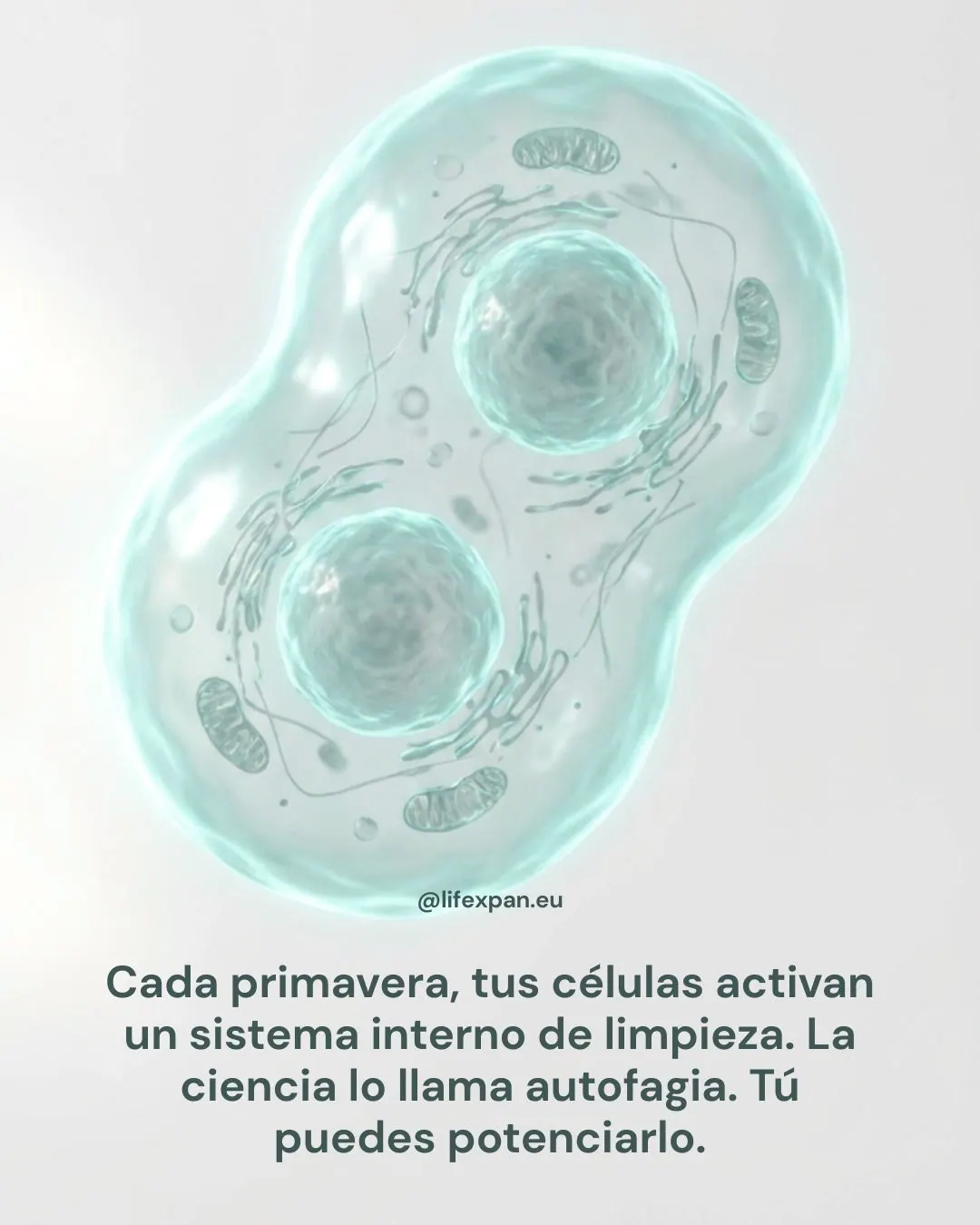
What does your body's "detox" actually mean?
When we talk about detox in scientific terms, we're not referring to any miracle green smoothie. We're talking about two fundamental biological processes that the body itself carries out continuously, and which intensify in certain seasonal and hormonal contexts:
The first is autophagy, a process through which cells remove their own faulty components: misfolded proteins, damaged organelles, metabolic debris. It's essentially the cell's internal recycling system. It's so important that its discovery earned the Nobel Prize in Medicine in 2016, awarded to Japanese biologist Yoshinori Ohsumi.
The second is antioxidation: the body's ability to neutralise free radicals, unstable molecules that cause damage to cells and lie at the root of cellular ageing and many chronic diseases.
Key fact
Autophagy acts as an ongoing cellular quality control system. When it fails or slows down — due to age, poor diet or a sedentary lifestyle — cellular "waste" builds up, contributing to accelerated ageing and neurodegenerative diseases.
With the arrival of spring, changes in day length and temperature influence our circadian rhythm and hormonal axis. There is evidence that seasonal cycles modulate the expression of genes linked to inflammation and cell repair. In other words: spring isn't just about mood; it's also a biological signal.
NAC: the precursor to the master antioxidant
N-acetylcysteine (NAC) is one of the most studied compounds in precision medicine and longevity research. Its main mechanism is simple yet powerful: it acts as a precursor to glutathione, the most abundant and powerful antioxidant produced by our own body.
Glutathione is, in essence, the cell's ultimate shield. It's responsible for neutralising free radicals, helping the liver eliminate toxins, and maintaining redox balance within each cell. The problem is that its levels decline with age, stress and exposure to environmental toxins. This is where NAC comes into play: by providing bioavailable cysteine — the limiting amino acid in glutathione synthesis — it allows the body to produce more of this antioxidant when it's needed most.
Beyond its antioxidant role, research shows that NAC also has mucolytic properties (it helps thin mucus, which is particularly useful when the seasons change), immunomodulatory effects, and can positively modulate the inflammatory response. A study published in Free Radical Biology and Medicine confirmed its ability to reduce systemic oxidative stress in contexts of high metabolic demand.
In simple terms
NAC is like supplying the raw materials your body needs to build its own cleaning system. It doesn't do the job on its own: it gives your cells what they need to work more efficiently.
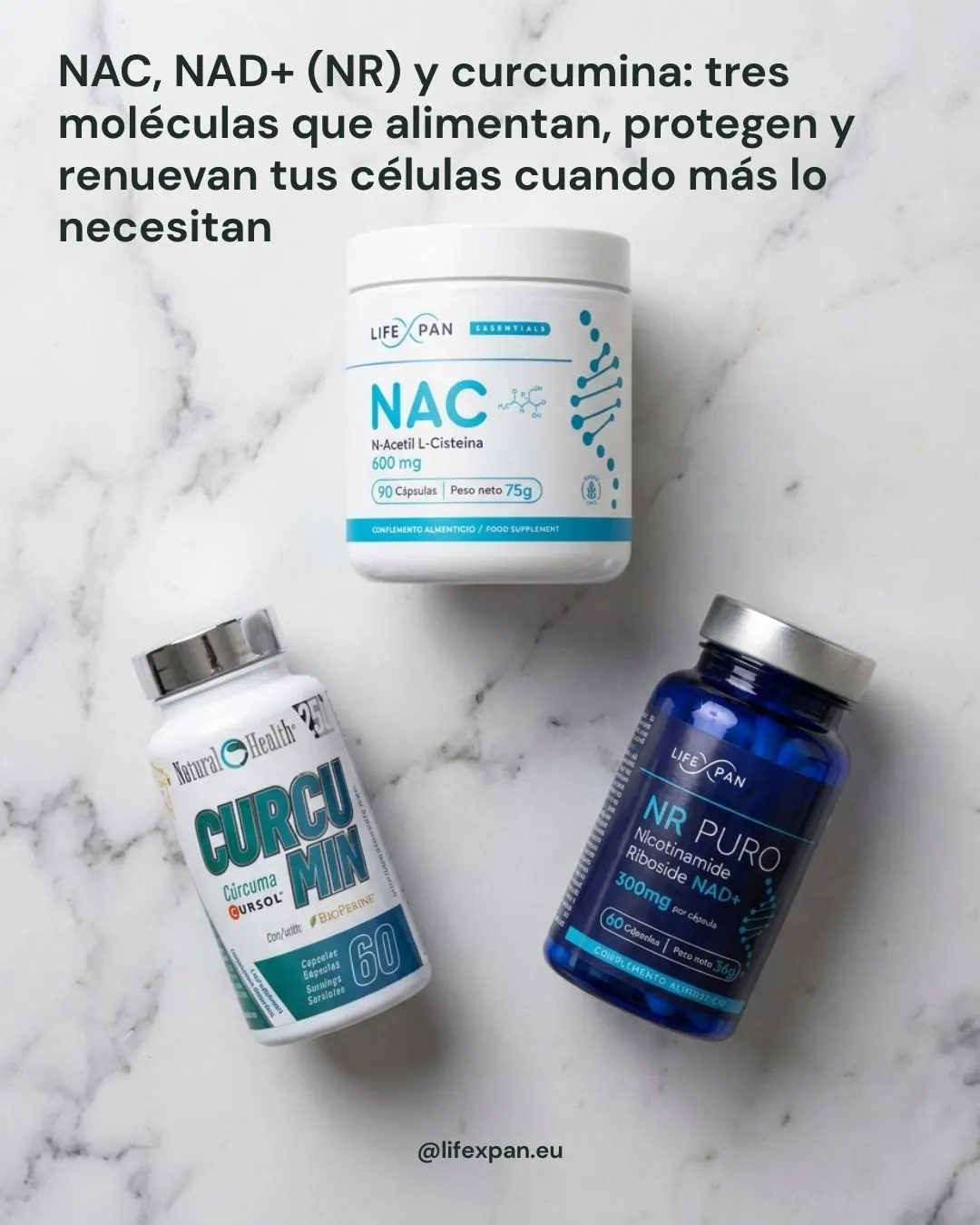
NAD+: the energy that fuels cellular repair
NAD+ (nicotinamide adenine dinucleotide) is a coenzyme molecule involved in more than 500 metabolic reactions in the human body. Without NAD+, the cell cannot produce energy efficiently, cannot repair its damaged DNA, and cannot activate the most important longevity proteins we know of: sirtuins.
The problem, well documented by researchers such as Dr David Sinclair of Harvard, is that NAD+ levels fall dramatically with age: by the age of 50, we may have less than half the NAD+ we had at 20. And that decline has direct consequences: less cellular energy, greater build-up of DNA damage, and a reduced capacity to adapt to metabolic stress.
This is where NR (Nicotinamide Riboside) —the most efficient and well-studied precursor of NAD+— takes centre stage. Through the cell's salvage pathway, NR is converted into NAD+ directly and efficiently. Clinical studies in humans, published in journals such as Nature Communications and Cell Metabolism, have confirmed that NR supplementation significantly raises NAD+ levels in blood and muscle tissue within a matter of weeks.
And what does this have to do with spring detoxing? The connection is direct: NAD+ is the fuel that sirtuins and DNA repair enzymes need in order to act. Without enough NAD+, autophagy slows down, the removal of damaged cells becomes less efficient, and tissue regeneration is compromised. Raising NAD+ is, in a way, powering up the cell's cleaning system so it can work at full capacity.
Curcumin: nature's inflammation regulator
Curcumin is the active polyphenol in turmeric, and one of the most researched plant compounds in the field of ageing biology. More than 15,000 scientific studies have been published on its biological effects, though it's worth pointing out something important: curcumin naturally has very low bioavailability, which has driven the development of advanced formulations that overcome this limitation and allow the molecule to actually reach the tissues.
Its mechanism of action is multiple. On one hand, it inhibits the transcription factor NF-κB, which acts as the master switch of chronic low-grade inflammation —that silent type of inflammation that doesn't hurt but underlies accelerated ageing and many modern diseases. On the other hand, it acts directly as an antioxidant, scavenging free radicals and stimulating the body's own antioxidant defences.
But perhaps most relevant to our conversation about spring detox is that curcumin has been shown to be an inducer of autophagy. Recent research, including work published in Autophagy and Aging Cell, points to curcumin activating the AMPK pathway, one of the key routes that triggers the cellular clean-up process, similar to what happens during intermittent fasting.
The synergistic trio: more than the sum of its parts
🛡️NAC: Raises glutathione levels. Boosts antioxidant defence and supports liver detoxification.
⚡ NAD+ (via NR): Fuels the cellular repair machinery. Activates sirtuins and efficient autophagy.
🌿Curcumin: Curbs chronic inflammation. Stimulates autophagy and neutralises free radicals.
What's most interesting is that these three molecules don't act in isolation: their mechanisms complement and reinforce one another. NAC provides the baseline antioxidant substrate. NAD+ supplies the metabolic energy needed for repair processes to work. Curcumin acts as a regulator of background inflammation and as an autophagy inducer. Together, they form a coherent, science-backed protocol to support cellular renewal in the transition from winter to spring.
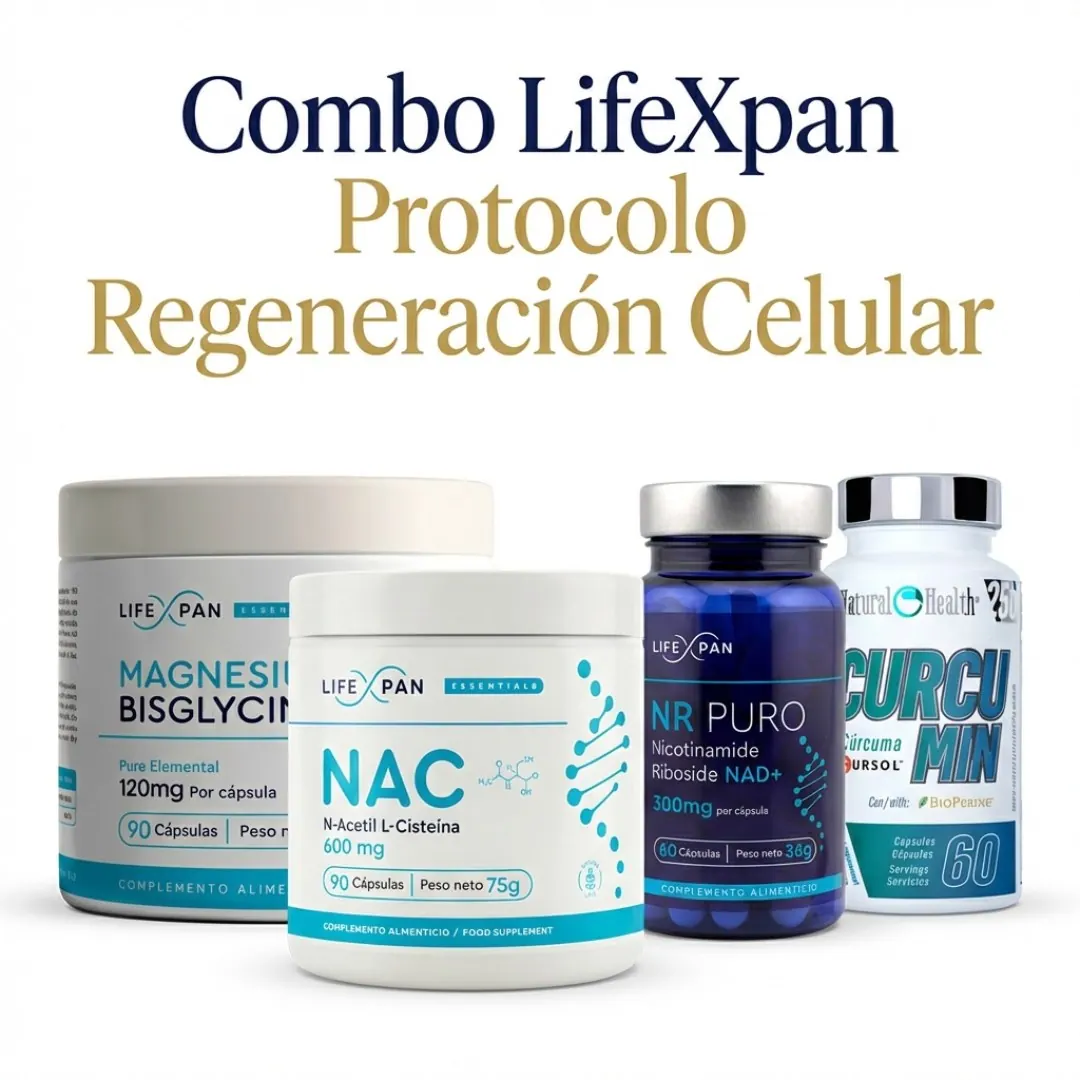
This is precisely the logic behind LifeXpan's Cellular Regeneration Protocol Combo: a formulation designed so these molecules work in synergy, with doses that reflect what clinical research has identified as effective.
How can you support these processes day to day?
Supplementation is a powerful tool, but it doesn't work in a vacuum. These are the habits science identifies as natural inducers of autophagy and cellular regeneration, and which sync particularly well with the changes of spring:
Morning sunlight exposure. Dawn light, rich in blue and red wavelengths, synchronises the circadian clock and modulates the expression of genes related to cellular repair. Ten or fifteen minutes without sunglasses upon waking can make a measurable difference to your biology.
Fasting windows. Intermittent fasting — even a 14 to 16 hour window — is one of the most powerful and well-studied autophagy inducers. In spring, extending breakfast can feel more natural thanks to increased daylight and shifts in appetite.
Movement in nature. Moderate exercise activates muscular autophagy and raises endogenous NAD+ levels. Doing it outdoors in spring adds the benefit of exposure to microorganisms from the natural environment, which stimulate the immune system in ways science is only just beginning to understand.
Reducing toxic load. Avoiding alcohol, tobacco and ultra-processed foods at this time of year allows liver detox systems — where glutathione plays a central role — to operate more efficiently. The liver can then focus its resources on endogenous clean-up, rather than managing external toxins.
The key to cellular spring
It's not about doing a radical "reset". It's about aligning your habits and supplementation with what your biology already wants to do at this time of year: clean, repair and renew. The science of longevity teaches us that small, consistent adjustments have an enormous cumulative impact.

Conclusion: renewal is a process, not a product
The concept of detox has been so misused by marketing that it's lost its real meaning. But behind the word lies a fascinating, well-documented biological reality: our cells have their own clean-up and regeneration systems that, when working properly, are more efficient than any juice or miracle diet.
Spring, with its shifts in light and temperature, gives us a favourable biological context. NAC, NAD+ and curcumin give us the molecular tools to boost those mechanisms. And mindful habits — sleep, movement, light, fasting — create the environment in which everything works better.
Cellular regeneration isn't a one-off event. It's an ongoing process we can nurture or neglect with every decision. This spring, you can choose to support it with science.
🌿 LifeXpan Cellular Regeneration Protocol
NAC 600mg + NR Puro 60 (NAD+) + Cursol® Curcumin + Magnesium Bisglycinate. Synergy formulated for cellular longevity.
cellular anti-ageing what is autophagy spring biohacking how to activate autophagy naturally how to increase NAD+ with supplements longevity food supplements anti-inflammatory curcumin curcumin and autophagy spring detox cellular regeneration natural liver detox supplements cellular ageing oxidative stress antioxidant glutathione chronic low-grade inflammation NAC for oxidative stress NAC supplement benefits NAD+ longevity NR nicotinamide riboside nutrition what supplements to take in spring free radicals cellular regeneration longevity circadian rhythm sirtuinas supplements for the change of season