
 USD
 Spain & Europe · EUR
 Mexico · MXN
NR and cardiovascular health: what science says about NAD+ and your arteries

There's a shift that happens in the body from around age 50 that almost nobody notices until it shows up in a blood test: the arteries become stiffer. And with that stiffness, blood pressure — especially the systolic figure, the top number — tends to creep up quietly.
This is no small matter. Arterial stiffness and elevated systolic blood pressure are two of the main age-related cardiovascular risk factors. And while exercise and diet remain the most solid tools for addressing them, longevity science has spent years exploring whether certain compounds might offer additional support.
One of those compounds is Nicotinamide Riboside (NR) — the NAD+ precursor that LifeXpan offers in its purest form. In this article, we look at what a pioneering study from the University of Colorado found about its relationship with arterial health, with the honesty to distinguish between what the science suggests and what is still to be confirmed.
❤️ Longevity & Cardiovascular Health · 6 min read · Backed by science

Why your arteries age — and why it matters
Healthy arteries are flexible. They expand and contract with every heartbeat, absorbing the force of circulating blood and keeping pressure within a healthy range. But with age, that flexibility is lost. Arterial walls become stiffer due to the build-up of oxidative stress, low-grade inflammation and changes in vascular smooth muscle tone.
That stiffness has a direct consequence: the heart has to work harder to pump blood, and systolic pressure rises. It's one of the mechanisms linking ageing to the risk of cardiovascular events — heart attacks, strokes and other conditions that remain the leading cause of death worldwide.
So where does NAD+ come into this story? NAD+ (nicotinamide adenine dinucleotide) is a central molecule in energy metabolism and cellular function. Its levels decline with age and chronic illness. And since the cells that keep arteries healthy also depend on NAD+ to function, researchers asked a logical question: could restoring NAD+ help improve vascular health?
💡 In simple terms
Picture a brand-new garden hose: flexible, easy to bend. Over the years, the rubber hardens and becomes brittle. Your arteries do something similar. And when a stiff hose receives the same water pressure, that pressure is transmitted with more force. That's essentially what happens to systolic pressure as we age.
The Colorado study: the first of its kind
In 2018, a team from the University of Colorado Boulder, led by Professor Douglas Seals and researcher Christopher Martens, published a study in Nature Communications that marked a starting point in this field. It was the first clinical trial to administer NR to humans over a sustained period to study its effects.
The design was rigorous: a randomised, double-blind, placebo-controlled, crossover trial in healthy middle-aged and older adults aged between 55 and 79. Participants took 500 mg of NR twice a day — 1,000 mg daily in total — for six weeks.
The main finding was clear and robust: NR supplementation raised blood NAD+ levels by approximately 60%. This confirmed for the first time in humans that NR is an effective and well-tolerated strategy for raising NAD+ — the central goal of any protocol based on this compound.
| Study parameter | Detail |
|---|---|
| Design | Randomised, double-blind, placebo-controlled, crossover |
| Participants | Healthy adults aged 55 to 79 |
| Dose | 1,000 mg of NR daily for 6 weeks |
| Main result | ~60% increase in blood NAD+ |
| Secondary result | Preliminary signals on blood pressure and aortic stiffness |
The cardiovascular angle: promising but preliminary
This is where it's worth being precise, because it's easy to overstate what the study found. Alongside the main finding on NAD+, the researchers observed preliminary data on cardiovascular health that point in a promising direction — but which are not conclusive.
In the subgroup of 13 participants who started out with elevated blood pressure or stage 1 hypertension, systolic pressure was roughly 10 points lower following NR supplementation. That's an interesting signal. But the authors themselves were very cautious in interpreting it.
As Dr Martens explained, this was a small, pilot-scale study, and it doesn't allow for definitive claims about the compound's efficacy for specific population segments. Professor Seals framed it with equal caution: they noted that if this magnitude of systolic pressure reduction were confirmed in a larger clinical trial, the biomedical implications could be significant — but that confirmation doesn't yet exist.
🔬 Key fact
The team itself described these cardiovascular findings as "a good starting point for future work", not as a settled conclusion. They proposed NR as a possible additional option — alongside the diet and exercise already recommended — for people whose blood pressure isn't yet high enough to require medication, but who remain at risk. The key word is "possible".

The mechanism: why it makes biological sense
Even though the clinical evidence is preliminary, the biological reasoning behind the hypothesis is solid. The Colorado study described something fascinating: NR appears to mimic some of the effects of calorie restriction — one of the most scientifically supported interventions for longevity — by activating the same metabolic pathways responsible for its benefits.
NAD+ is required for the activity of sirtuins, the proteins that regulate the cellular stress response and tissue repair. In the vascular context, adequate NAD+ levels could help reduce oxidative stress and improve the bioavailability of nitric oxide — the molecule that allows arteries to relax and dilate. Better nitric oxide function translates into more flexible arteries and, potentially, better-controlled blood pressure.
It's important to understand that this mechanism explains why the hypothesis is reasonable, not that it has been proven in humans on a large scale. The biology suggests a plausible pathway. Large clinical trials still need to confirm it.
What has happened since
The 2018 study opened up a line of research that remains active. The same researchers, along with other teams, have continued exploring the relationship between NR, NAD+ and cardiovascular health in subsequent trials.
The overall conclusion from this more recent research is nuanced: NR is consistently effective and safe at raising NAD+ levels, but its direct cardiovascular effects are more variable and depend on factors such as the population studied, the duration of treatment, and whether it's combined with other interventions. Some studies have found positive signals in markers of arterial stiffness; others have found no significant effects on blood pressure. This is exactly the kind of mixed picture you'd expect in a young, evolving field of research.
What this means in practice matters: NR is not a medication for hypertension and shouldn't be used as one. It's a supplement that reliably raises NAD+ — with everything that implies for cellular energy metabolism — and whose cardiovascular potential is still being studied.
✨ The honest perspective
NR won't replace exercise, diet, or medication prescribed by your doctor. What the science suggests is that, as part of a healthy lifestyle, restoring NAD+ levels could provide additional support for vascular health. It's one more piece of the longevity puzzle — not the complete solution.

What you can do today for your arterial health
Beyond supplementation, these are the pillars with the strongest evidence for keeping arteries young — and any NAD+ based strategy should always be combined with them:
Regular aerobic exercise. Brisk walking, swimming or cycling improves nitric oxide function and reduces arterial stiffness. It's by far the most effective non-pharmacological intervention for vascular health. No molecule can replace it.
Reducing oxidative stress. A diet rich in polyphenols — extra virgin olive oil, berries, leafy green vegetables — and low in ultra-processed foods protects the endothelium, the inner lining of the arteries.
Controlling salt and alcohol. Two of the factors with the most direct and rapid impact on blood pressure. Small adjustments produce measurable changes within a few weeks.
Restoring NAD+. Within that framework of healthy habits, maintaining adequate NAD+ levels through a precursor such as NR is a strategy with solid biological grounding and a well-documented safety profile.
Conclusion: honest science
The relationship between NR and cardiovascular health is one of the most interesting — and most misunderstood — fields in longevity science. The truth is nuanced: NR reliably and safely raises NAD+, and preliminary data on its effect on blood pressure and arterial stiffness are promising, especially in people with elevated blood pressure. But they are preliminary. Large-scale confirmation is still on its way.
At LifeXpan, we believe the best way to talk about longevity is with rigour: neither downplaying the potential of a compound with genuine scientific grounding, nor overstating what the evidence doesn't yet support. NR is a valuable tool for restoring the NAD+ your body loses with age. Its role in cardiovascular health is a promise that science is still investigating — and one well worth following closely.
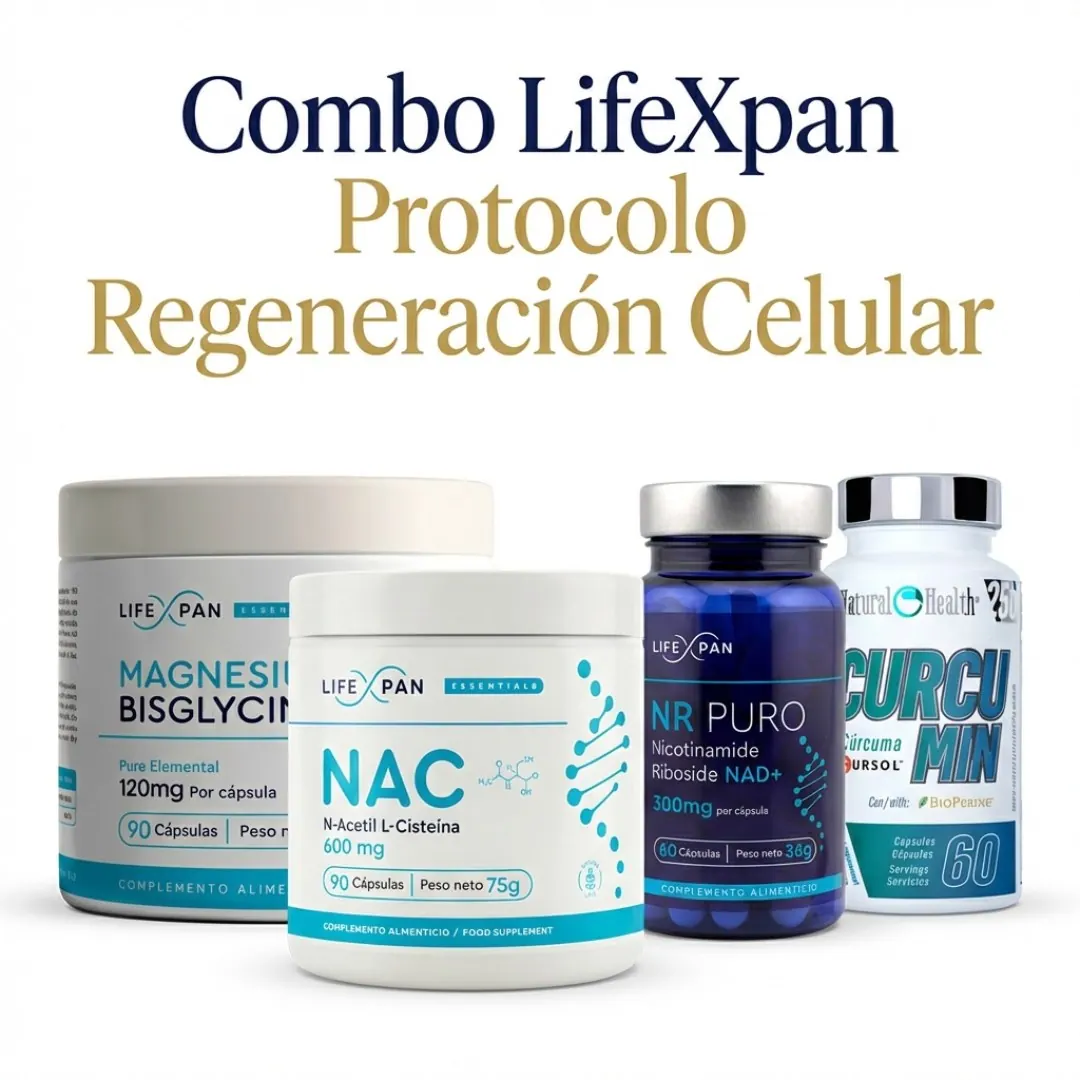
❤️ LifeXpan® Pure NR
The most scientifically backed NAD+ precursor, in its purest form. 300 mg of pure NR powder per capsule, pharmaceutical grade. The most direct way to restore the NAD+ your body loses with age.
Scientific references
Martens, C.R. et al. (2018). Chronic nicotinamide riboside supplementation is well-tolerated and elevates NAD+ in healthy middle-aged and older adults. Nature Communications, 9, 1286.
Freeberg, K.A. et al. (2022). Nicotinamide riboside supplementation for treating elevated systolic blood pressure and arterial stiffness in midlife and older adults. Frontiers in Cardiovascular Medicine, 9, 881703.
Lin, Y. et al. (2025). Nicotinamide riboside combined with exercise to treat hypertension in middle-aged and older adults: a pilot randomized clinical trial. GeroScience, 47(6), 6895–6908.
Rajman, L. et al. (2018). Therapeutic potential of NAD-boosting molecules. Cell Metabolism, 27(3), 529–547.
how to improve arterial health after 50 does NR lower blood pressure arterial oxidative stress NAD+ arterial stiffness nicotinamide riboside Colorado study nicotinamide riboside blood pressure NR cardiovascular ageing NR cardiovascular health vascular nitric oxide NAD precursors heart systolic pressure and age what effect does NAD+ have calorie restriction mimetic vascular health longevity supplements for age-related arterial stiffness pulse wave velocity vitamin B3 arteries