
 USD
 Spain & Europe · EUR
 Mexico · MXN
The energy paradox: why living wears you down
There's a paradox at the very heart of being alive, and it's rarely explained well: the same process that keeps you energised is also the one that wears you down the most. This isn't a rhetorical contradiction — it's pure biochemistry, and understanding it completely changes how you should think about supplementation for energy and longevity.
🔥 Longevity Science · 7 min read · Educational information
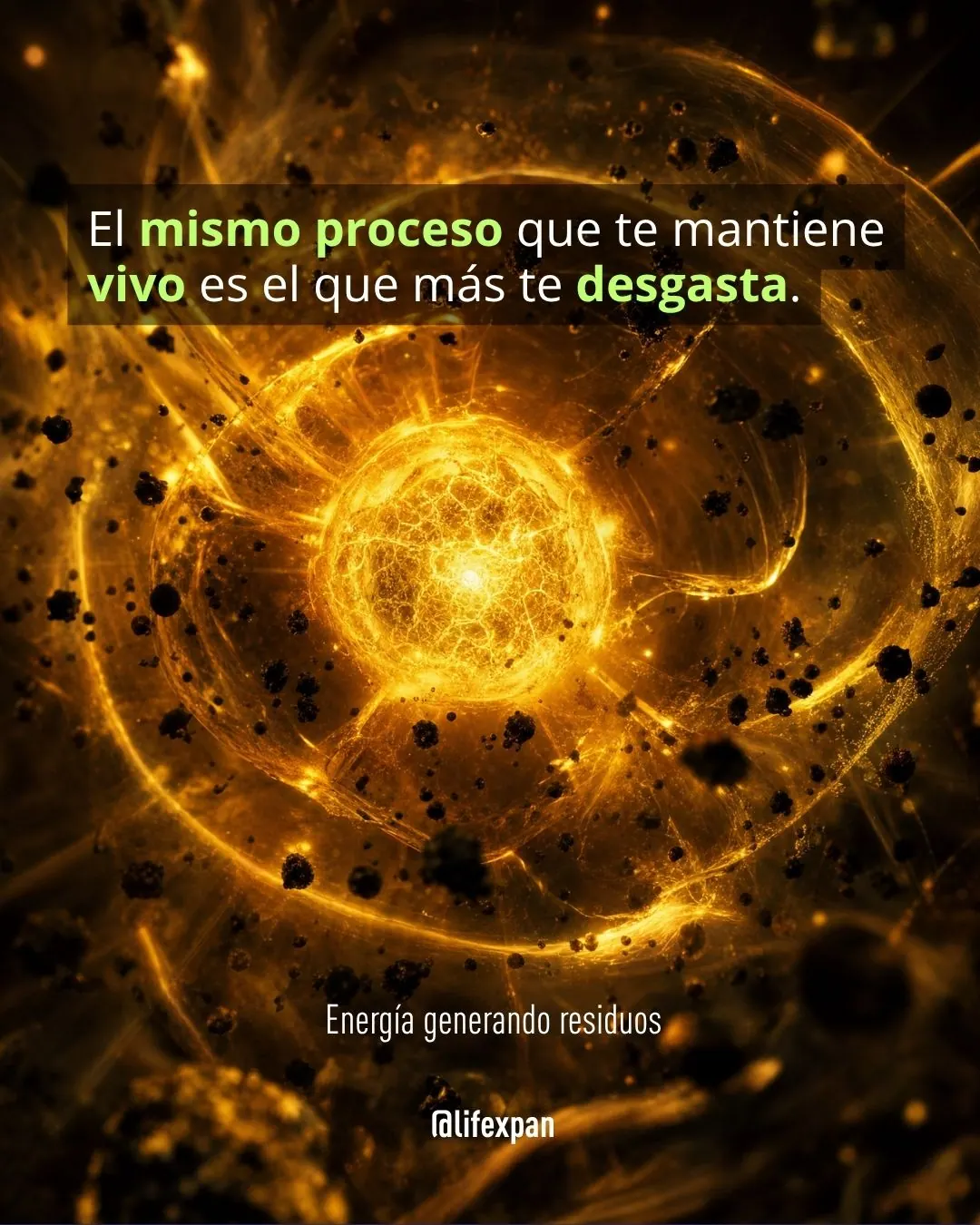
Producing energy comes at a cost
Every cell in your body breathes oxygen to produce ATP, the energy you use for everything. It's an extraordinarily efficient process — and, inevitably, a messy one. As a by-product of this cellular combustion, reactive oxygen species (ROS) are generated, better known as free radicals.
The scientific literature describes this with a word that keeps coming up: paradox. Oxygen is essential for producing energy efficiently, but that very same process — the more intense it is, the more ROS it generates — is an unavoidable source of oxidative stress. There's no way to produce cellular energy without also generating some of the wear and tear that, over time, contributes to ageing.
💡 In simple terms
Think of your mitochondria as a combustion engine. The harder it works, the more energy it produces — and the more "smoke" it releases through the exhaust pipe. There's no such thing as a combustion engine without waste. The relevant question isn't how to avoid the smoke entirely, but how to manage it well.
Why "take more antioxidants" is an incomplete answer
The intuitive reaction to this is to think: if the problem is free radicals, the solution is antioxidants. The more, the better. But that logic falls short, for a reason science has been refining in recent years.
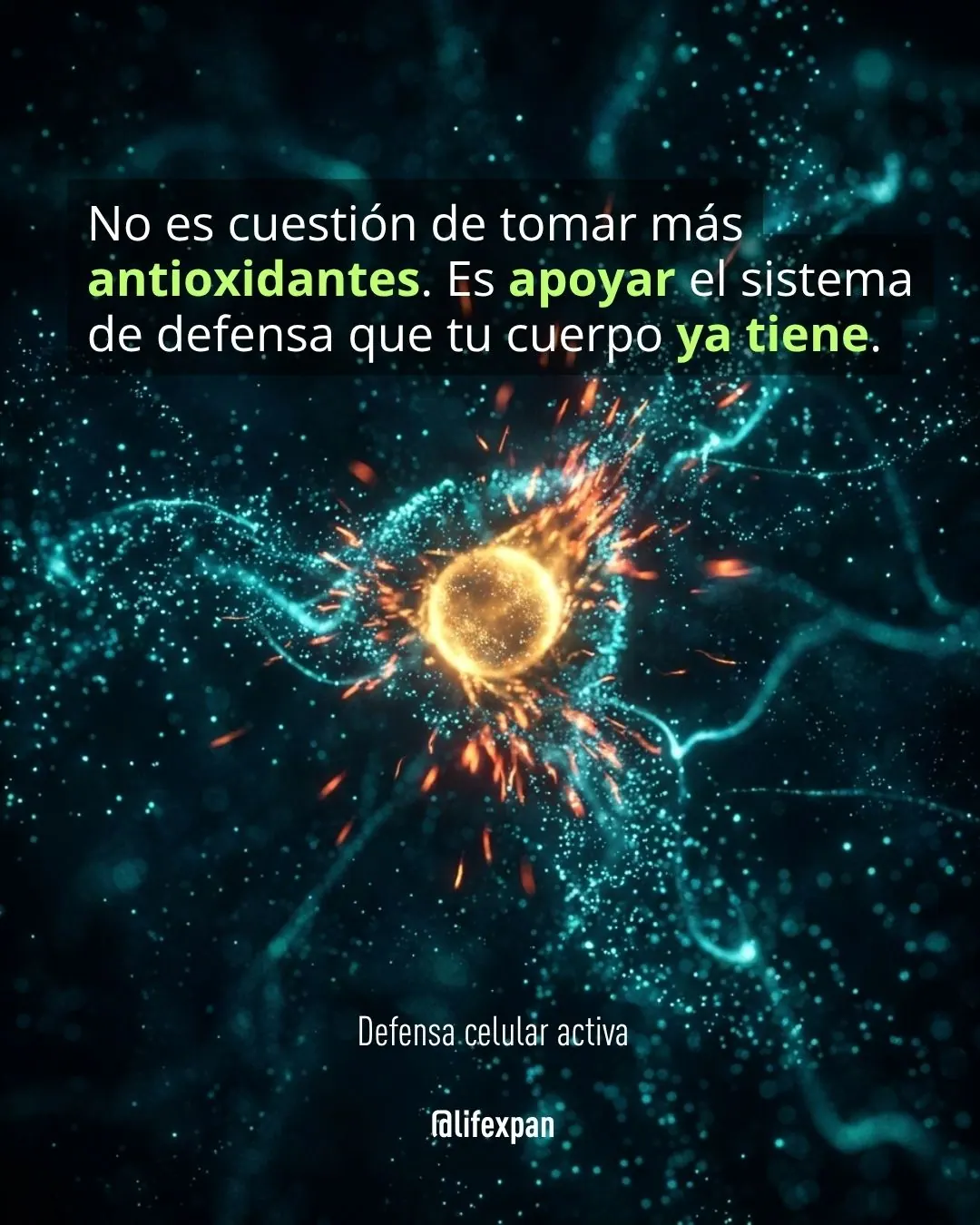
Your body doesn't rely solely on antioxidants you take in from outside. It has its own enzymatic defence system — led by a family of enzymes called superoxide dismutases (SOD), which act as the first line of defence by neutralising the most immediate free radical generated by energy production, superoxide, right where it's produced. It's a system far more sophisticated than "more vitamin C is better": it's a precisely regulated enzymatic network, with different players in different compartments of the cell.
What's more, not all ROS are "the enemy". Recent research confirms that, in the right amounts, they play a role in cellular signalling — taking part in regulation and adaptation processes, and even in the response to exercise. The problem isn't that they exist; the problem is when they overwhelm the system and the defences can't keep up.
🔬 Key fact
Research describes the balance between producing ATP and generating ROS as one the body actively regulates, not as a war to be won simply by adding "more antioxidants". Slowing down metabolism reduces ROS, but it also reduces the energy available. The goal isn't to eliminate the process — it's to properly support both sides of the equation.
The two sides of the equation
Here's the central idea of this whole article: since the problem has two sides — energy is needed, and that energy generates wear — the sensible answer also has two sides. It's not enough to support one without the other.
First side: keep producing energy efficiently. Coenzyme Q10 is a central component of the electron transport chain, where ATP is produced. Mitochondria that function efficiently don't just generate more energy — they also generate, proportionally, less ROS per unit of energy produced, because the process flows more smoothly.
Second side: strengthen the defence against what that process generates. This is where support for the body's own enzymatic defences comes in — such as that offered by TetraSOD®, an extract from a marine microalgae that provides superoxide dismutase, the same family of enzymes that acts as the body's natural first line of defence. This isn't about adding one more antioxidant to the pile, but about supporting the machinery your own body already uses to manage the ROS it produces.
✨ The key idea
Living wears you down, because producing energy and generating ROS are the same coin with two faces. That's why supporting only one side — taking antioxidants on their own without also supporting energy production, or the other way round — leaves the equation half-finished. The two parts work together, not separately.
So where does NR fit in?
This whole process — both ATP production and ROS generation — depends on the mitochondria having the fuel they need to function. NAD⁺ is that starting piece: without enough of it, the whole machinery — energy production and defence system included — loses efficiency. NR, as a direct precursor of NAD⁺, helps replenish what age reduces, sustaining the foundation everything else relies on.
⚠️ An important note
None of this replaces a varied diet rich in natural antioxidants (fruit, vegetables, polyphenols), nor a lifestyle that includes exercise and good rest. If you take regular medication, consult your healthcare professional before supplementing. Food supplements are not a substitute for a balanced diet.
Conclusion
The paradox of living is this: the process that gives you energy is, at the same time, the one that wears you down the most. There's no way to eliminate that wear without stopping energy production — so the useful question isn't how to avoid it, but how to properly support both sides of the same coin: continuing to produce energy efficiently, while reinforcing the defences that manage what that process generates.
🔥 Energy and cellular defence · LifeXpan®
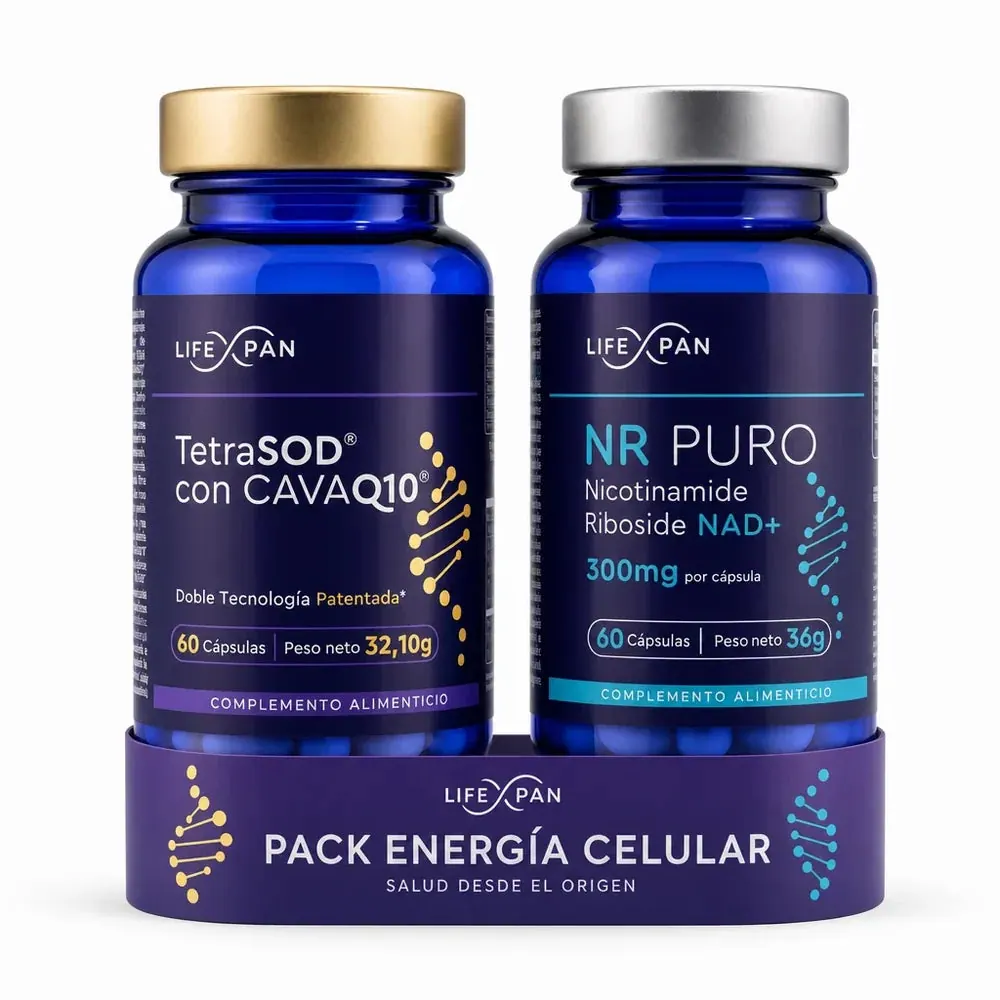
Pure NR, CavaQ10® and TetraSOD®: fuel for energy production, and support for the body's own enzymatic defences. Two sides of the same equation.
Scientific references
Nasi, M. et al. (2025). Pathophysiology of reactive oxygen species (ROS): compartmental signaling and disease. Review, PMC.
Ye, Z. et al. (2024). Systems-level analyses dissociate genetic regulators of reactive oxygen species and energy production. PNAS, 121.
Guo, C. et al. (2011). Antioxidants Maintain Cellular Redox Homeostasis by Elimination of Reactive Oxygen Species. Cellular Physiology and Biochemistry, 44(2), 532–553.
Yu, W. et al. (2025). Reactive Oxygen Species Across Death Pathways: From Redox Sensing to Signal Transduction. International Journal of Molecular Sciences, 26(20), 10240.
Hernández-Camacho, J.D. et al. (2018). Coenzyme Q10 Supplementation in Aging and Disease. Frontiers in Physiology, 9, 44.
CavaQ10® and gamma-cyclodextrin technology are brands and technology of WACKER Chemie AG, used under licence. TetraSOD® is a registered trademark of Fitoplancton Marino, S.L., used under licence. Informational content only. This does not constitute an authorised health claim.
how to reduce oxidative stress naturally enzymatic antioxidant defence what is oxidative stress the ROS paradox why antioxidants alone aren't enough why producing energy generates free radicals free radicals and cellular energy ROS and ageing are free radicals good or bad what does superoxide dismutase do