
 USD
 Spain & Europe · EUR
 Mexico · MXN
Magnesium: The Conductor of the Orchestra for Insulin Sensitivity

Insulin resistance has become a silent yet widespread health concern. However, recent science has consolidated the role of an essential mineral, magnesium, not merely as a supporting player, but as a fundamental element in restoring metabolic balance and glycaemic control.
The Discovery: Consolidating the Evidence on Glycaemic Control
Magnesium is not just a mineral; it is a cofactor critical to more than 300 enzymatic processes in our body. In carbohydrate metabolism, its role is vital:

The Science Behind the Insulin-Magnesium Link
Recent meta-analyses (2022-2023) have strengthened the evidence that magnesium supplementation is an effective aid in improving insulin sensitivity.
Magnesium is needed for the function of the enzymes that process glucose and energy. Without sufficient magnesium, these biological "engines" slow down.
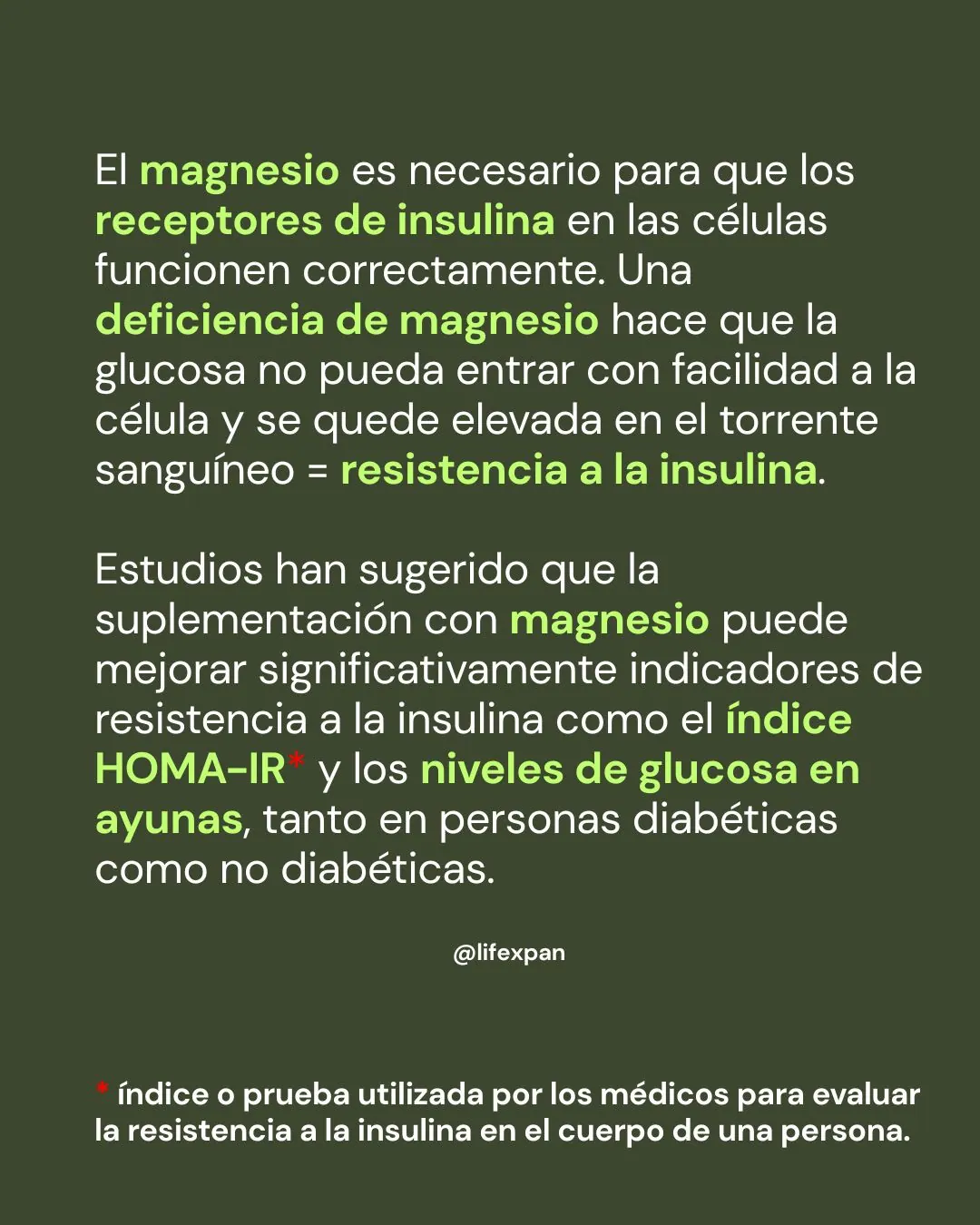
Magnesium is required for the insulin receptor on the cell surface to correctly send its signal into the cell. When magnesium deficiency occurs (hypomagnesaemia), this signalling is compromised, preventing cells from taking up glucose from the bloodstream. This is known as insulin resistance.
Reviews of clinical trials have shown that supplementation significantly reduces Fasting Blood Sugar (FBS) and Glycated Haemoglobin (HbA1c). HbA1c is especially revealing, as it measures average glycaemic control over the previous three months.
How Could This Change Your Life?
This discovery translates into a potential life change by offering a simple nutritional tool for a complex problem:
More Stable Energy: By improving insulin sensitivity, your body uses glucose (energy) more efficiently, avoiding the sugar spikes and crashes that cause fatigue and cravings.
Lower Metabolic Risk: Improvement in the insulin resistance index (HOMA-IR) and reduced HbA1c are directly linked to the prevention or management of serious conditions such as Type 2 Diabetes, Metabolic Syndrome and obesity.
Long-Term Investment: As a limiting factor, ensuring optimal magnesium levels is a long-term strategy, helping to protect your metabolic pathways over time.
Now, the challenge is not just taking magnesium, but making sure the body genuinely absorbs and tolerates it without side effects. This is where the Pharmacokinetic Primacy of advanced formulations, such as Magnesium Bisglycinate, comes into play.
Bisglycinate: Smart Absorption
Bisglycinate is a chelate, in which the magnesium ion (Mg2+) is bound to two molecules of the amino acid glycine.
This neutral, chelated structure is crucial. It allows magnesium to be absorbed intact through the peptide channels in the small intestine. By "hiding" within glycine, chelated magnesium avoids competition with other minerals and the saturable transport mechanisms that affect inorganic salts.
The key metric is not the percentage of elemental magnesium in the supplement, but the biologically active dose that reaches the tissues.
While Magnesium Oxide has a high elemental content (∼60%) but low absorption (∼4%−15%), Bisglycinate has a more modest elemental content (∼14%), but achieves an exceptionally high bioavailability, close to 80%−90%. This means that more magnesium actually reaches your cells to help you with insulin.

Superior GI Tolerance
This chelated formulation also addresses the issue of gastrointestinal (GI) tolerance. It Avoids the Laxative Effect: Highly dissociable magnesium salts (such as oxide or citrate at high doses) release free magnesium ions into the colon, triggering an osmotic effect that draws in water and causes diarrhoea or discomfort. Bisglycinate mitigates this risk because the neutral molecule is absorbed via different peptide pathways, resulting in excellent stomach compatibility and minimal laxative effects.
To improve insulin sensitivity, high doses (≥400 mg/day) and a prolonged duration (≥90 days) are required to replenish intracellular stores.
Superior gastrointestinal tolerance allows you to take the necessary therapeutic dose every day and for long enough (the chronicity that science demands) without uncomfortable digestive side effects.
By ensuring that magnesium is highly absorbed and that supplementation is sustainable in the long term, bisglycinate maximises the "value per unit absorbed", making your investment in metabolic health truly effective.
References used
You have just read the scientific evidence showing that Magnesium Bisglycinate is essential for improving insulin sensitivity and ensuring maximum absorption without digestive discomfort.
The challenge, as we mentioned, is not just taking magnesium, but making sure the body actually absorbs and tolerates it at the dose required.
That's why we have selected a formulation that rigorously meets the Pharmacokinetic Primacy criteria demanded by science. Introducing LifeXpan's Magnesium Bisglycinate.
This product is the embodiment of what you have just learned:
-
Chelated Formulation: Ensures superior bioaccessibility (close to 90%) by being absorbed via peptide pathways.
-
Unmatched GI Tolerance: Allows intake of the high therapeutic doses needed for insulin sensitivity, without triggering the dreaded laxative effect.
-
Guaranteed Compliance: The key to the chronicity (sustained long-term intake) that your metabolic pathways need.
It's time to move from theory to effective action.
Invest in the magnesium your body can actually use for stable energy and optimal glucose control:

You can also find it in our COMBOS, where you can save up to 16% off.
bioaccesibilidad magnesium bisglycinate glycaemic control magnesio metabolismo metabolic health Health and wellbeing effective supplementation