
 USD
 Spain & Europe · EUR
 Mexico · MXN
From Arctic waters to the lab: how the bowhead whale's genome challenges ageing
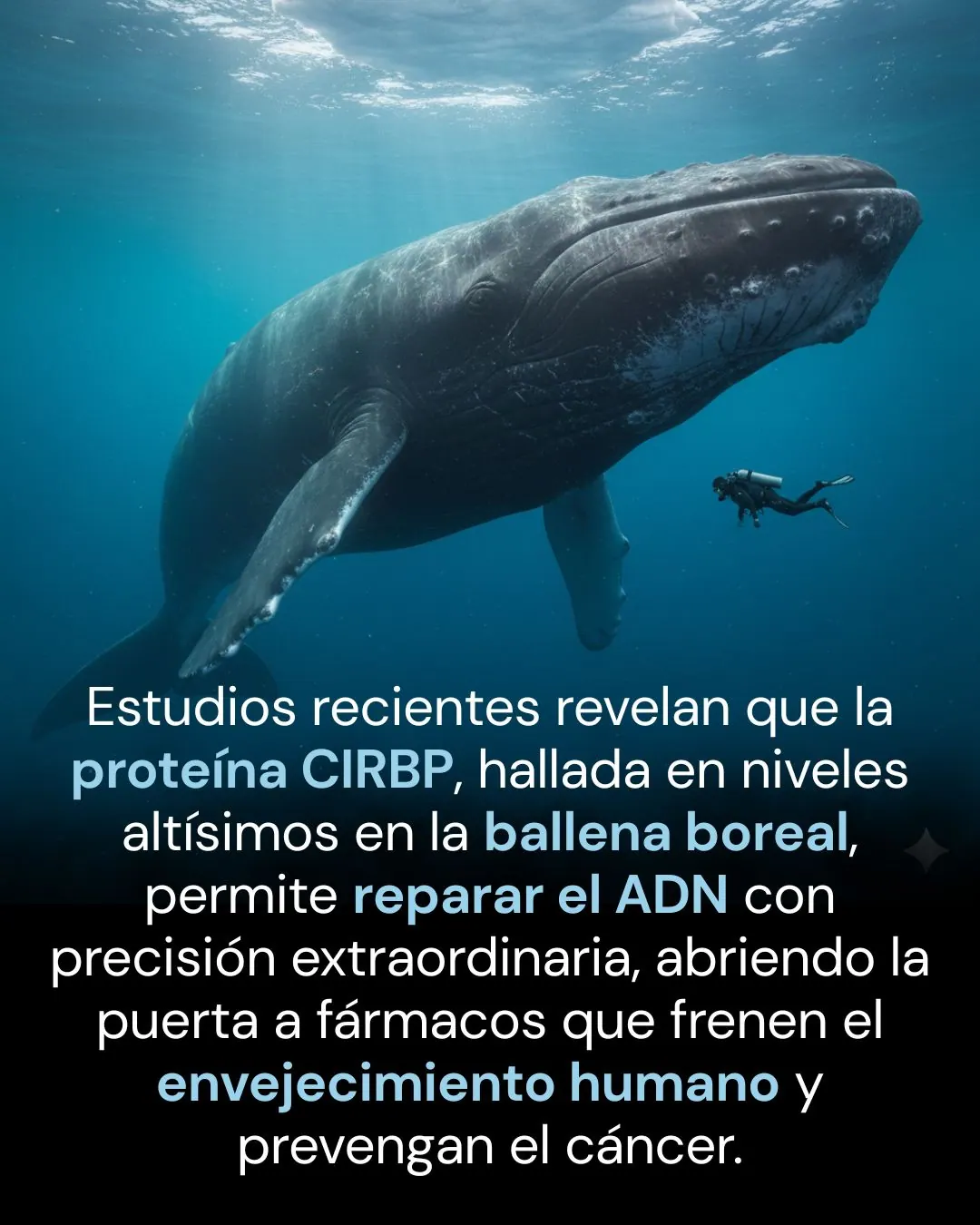
Biological ageing in mammals is closely linked to genomic stability. As our cells divide and face environmental stressors, DNA accumulates damage. When this damage exceeds the body's repair capacity, degenerative diseases and cancer appear.
However, there is one mammal that defies these rules: the bowhead whale (Balaena mysticetus), a mammal weighing 100 tonnes and measuring 20 metres in length. This Arctic cetacean can live for more than 200 years, remaining practically cancer-free despite having 100 trillion cells, a staggering number that, in theory, should exponentially increase its risk of malignant mutations (a phenomenon known as Peto's Paradox).
The discovery of the CIRBP protein
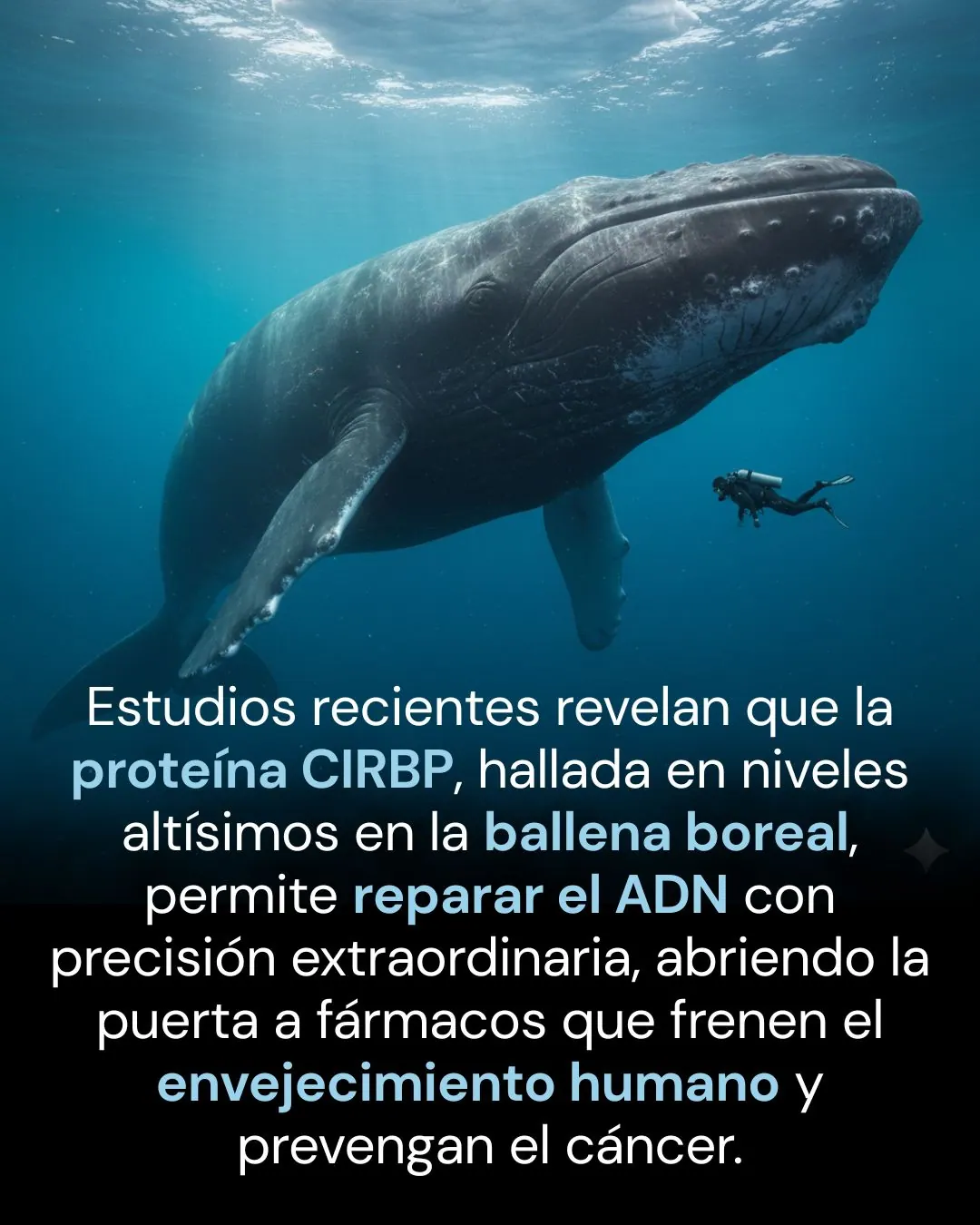
Research led by the University of Rochester and Albert Einstein College of Medicine has identified a key piece in this resistance: the protein CIRBP (Cold-Inducible RNA-Binding Protein).
Genomic analyses revealed that the bowhead whale maintains CIRBP levels up to 100 times higher than other mammals. By transferring the gene for this protein into human cells in the laboratory, scientists observed a dramatic improvement in these cells' ability to correct critical damage, specifically double-strand DNA breaks, which are the most lethal to cell survival.
Mechanism of action: The genetic "conductor"
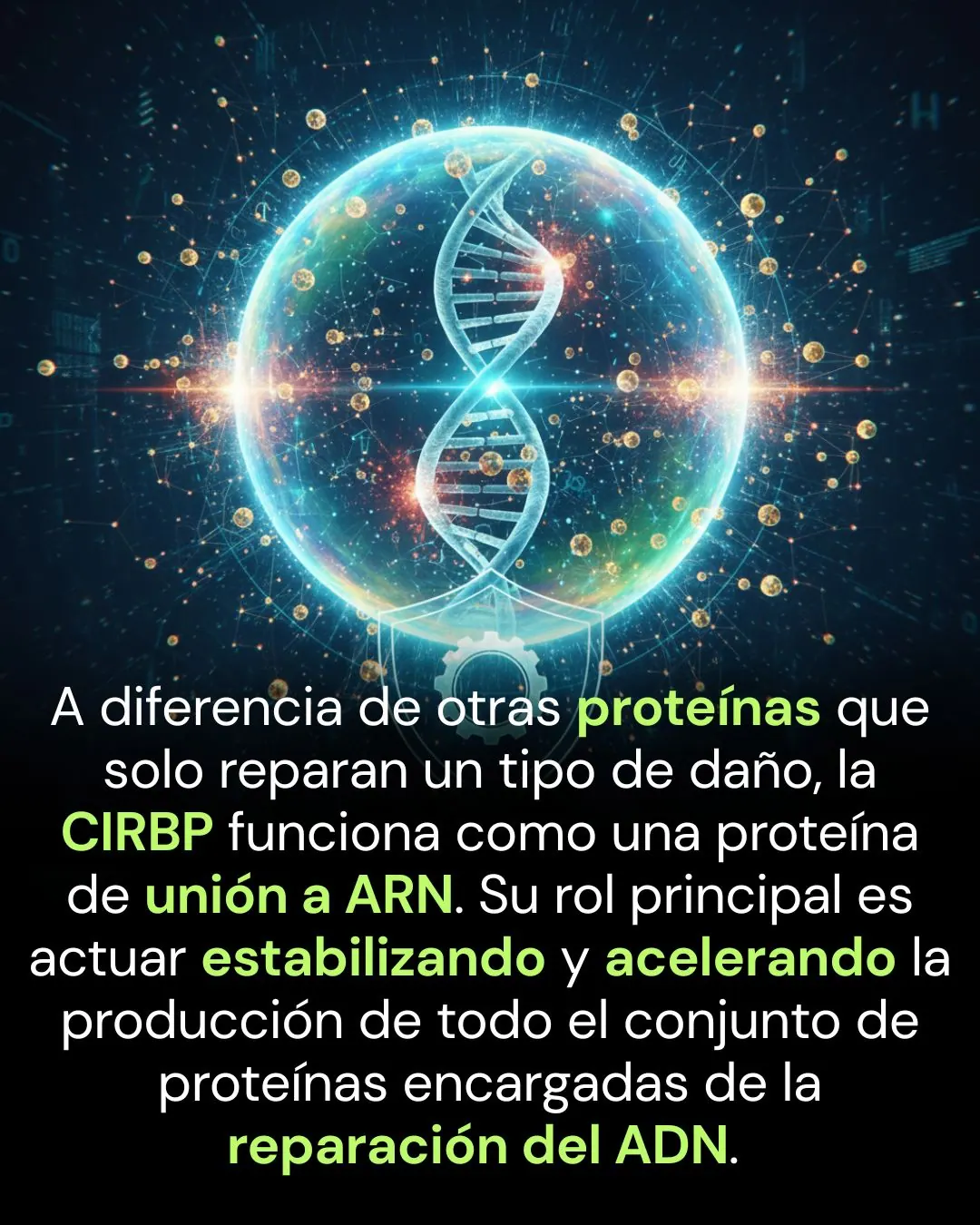
Unlike other proteins that only repair one type of damage, CIRBP works as an RNA-binding protein. Its main role is to act as a "chaperone", stabilising and speeding up the production of the entire set of proteins responsible for DNA repair. This ensures that the cell's maintenance machinery is always active and ready to intervene in the event of any genomic catastrophe.
The link between cold and longevity
The protein's name, "cold-inducible", reveals its direct connection to the Arctic environment. In mammals, CIRBP production is a survival response to environmental stress.
- Temperature hormesis: Exposure to low temperatures (mild hypothermia) stimulates CIRBP production. The bowhead whale, living in freezing waters, keeps this mechanism "switched on" chronically.
- Metabolic connection: CIRBP is also activated by fasting or lack of oxygen, linking it to well-known longevity pathways such as AMPK and mTOR, which optimise energy use and cellular clean-up (autophagy).
Is cryotherapy effective in humans?
Although there is great interest in cold showers or ice immersion as a way to replicate this effect, clinical evidence in humans is still limited. A critical point is the anabolic dilemma: extreme cooling after exercise has been shown to reduce muscle protein synthesis by up to 26%, which could accelerate muscle frailty (sarcopenia) if not carried out in a moderate and controlled way.
The medical challenge: CIRBP's double role
Despite its anti-ageing potential, translating this discovery into human medicine faces a complex biological obstacle:
- Oncological context: While in the whale CIRBP prevents cancer, in humans it has been observed that, once a tumour already exists, the protein can be co-opted by cancer cells to stabilise their own genes and proliferate.
- Inflammatory risk (eCIRP): The greatest danger lies in the extracellular form of the protein. If CIRBP leaves the cell and enters the bloodstream (due to trauma or severe stress), it becomes a pro-inflammatory molecule that can trigger sepsis or systemic shock.
Future outlook
The path towards a "bowhead whale therapy" requires the development of drugs able to increase CIRBP exclusively within the cell. Future strategies will likely combine intracellular activators with agents that block any possible release of the protein to the outside, thereby avoiding inflammatory effects.
This discovery not only promises advances in anti-ageing medicine here on Earth, but also has applications in space medicine, where ultra-efficient DNA repair is vital to protect astronauts from ionising radiation during long-duration missions.
Main sources
DNA repair and anti-cancer mechanisms in the long-lived bowhead whale.
Bowhead whale genome sequencing and analysis
Bowhead whales’ secret to long life may lie in a protein
La ballena boreal de 200 años revela pistas clave para alargar la vida humana
Ballenas boreales: la proteína que repara el ADN y les ayuda a llegar a los 200 años.
While longevity research keeps advancing, there are already proven methods just a click away. Take a look at our packs for a longer, healthier life:
Combo Longevidad

Combo Sinergia Longevidad Avanzada

Anti-ageing gene activation Balaena mysticetus Effects of cold on cell repair longevity genetics cold hormesis mechanisms of extreme longevity regenerative medicine CIRBP Protein DNA repair 2025 Cancer resistance in mammals secrets of the bowhead whale